The Sora Program
Virtual
6-8

A Different Way to Experience Middle School

A tuition-free online middle school program for grades 6–8 that combines personalized learning, meaningful relationships, and real-world projects. In partnership with Sora, students experience a dynamic education that prepares them for high school and for life.

6th Grade Curriculum

Humanities

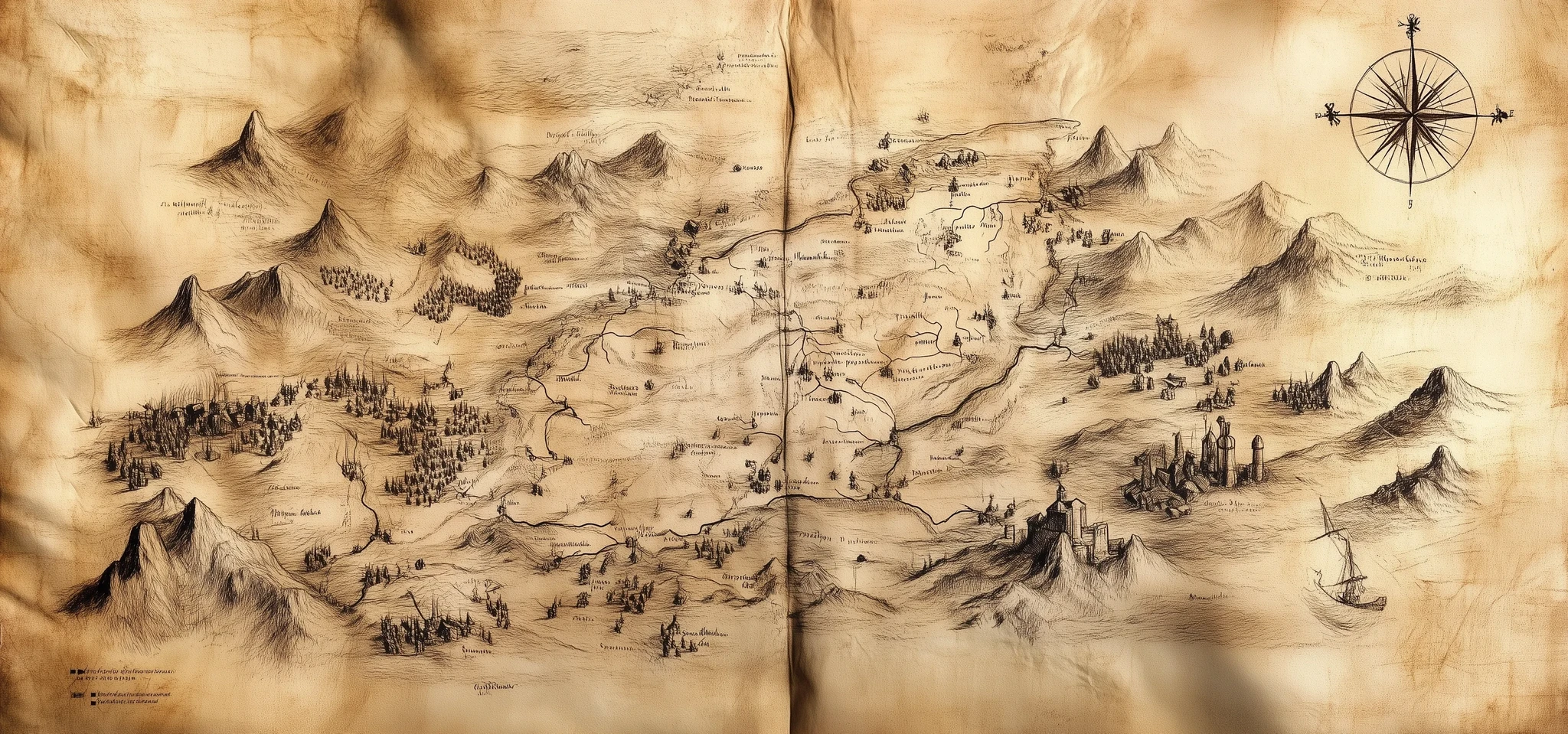
Civilization Lab

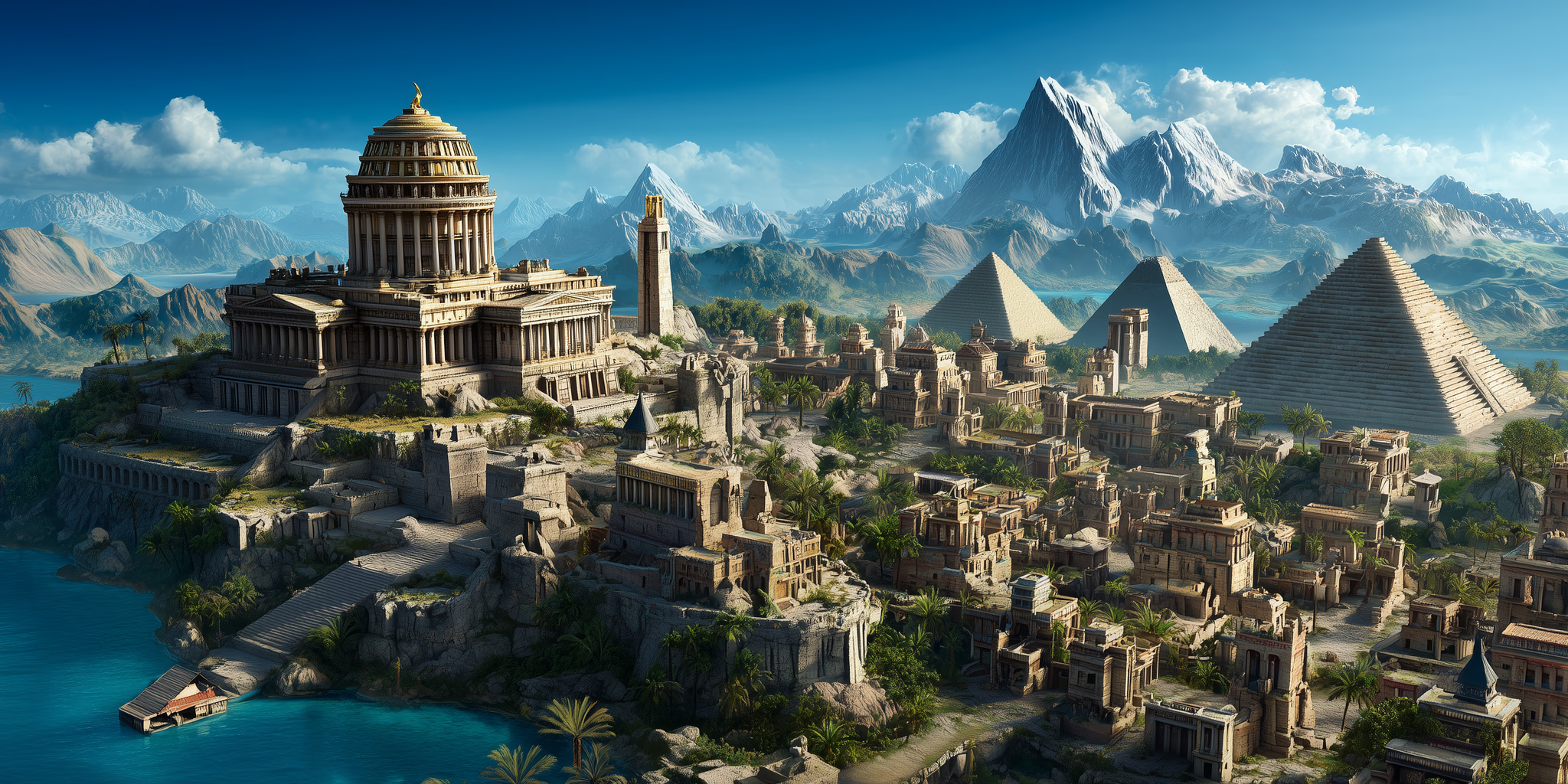
Ever dreamed of creating your own empire, designing towering cities, or shaping the laws of an entire society? In this course, you’ll become the architect of a brand-new civilization, drawing inspiration from some of history's most influential societies—like the Inca Empire, Ancient Rome, Medieval Japan, and modern America. Each week, you’ll uncover the secrets of past civilizations, take part in interactive challenges, and apply your knowledge to bring your own world to life.

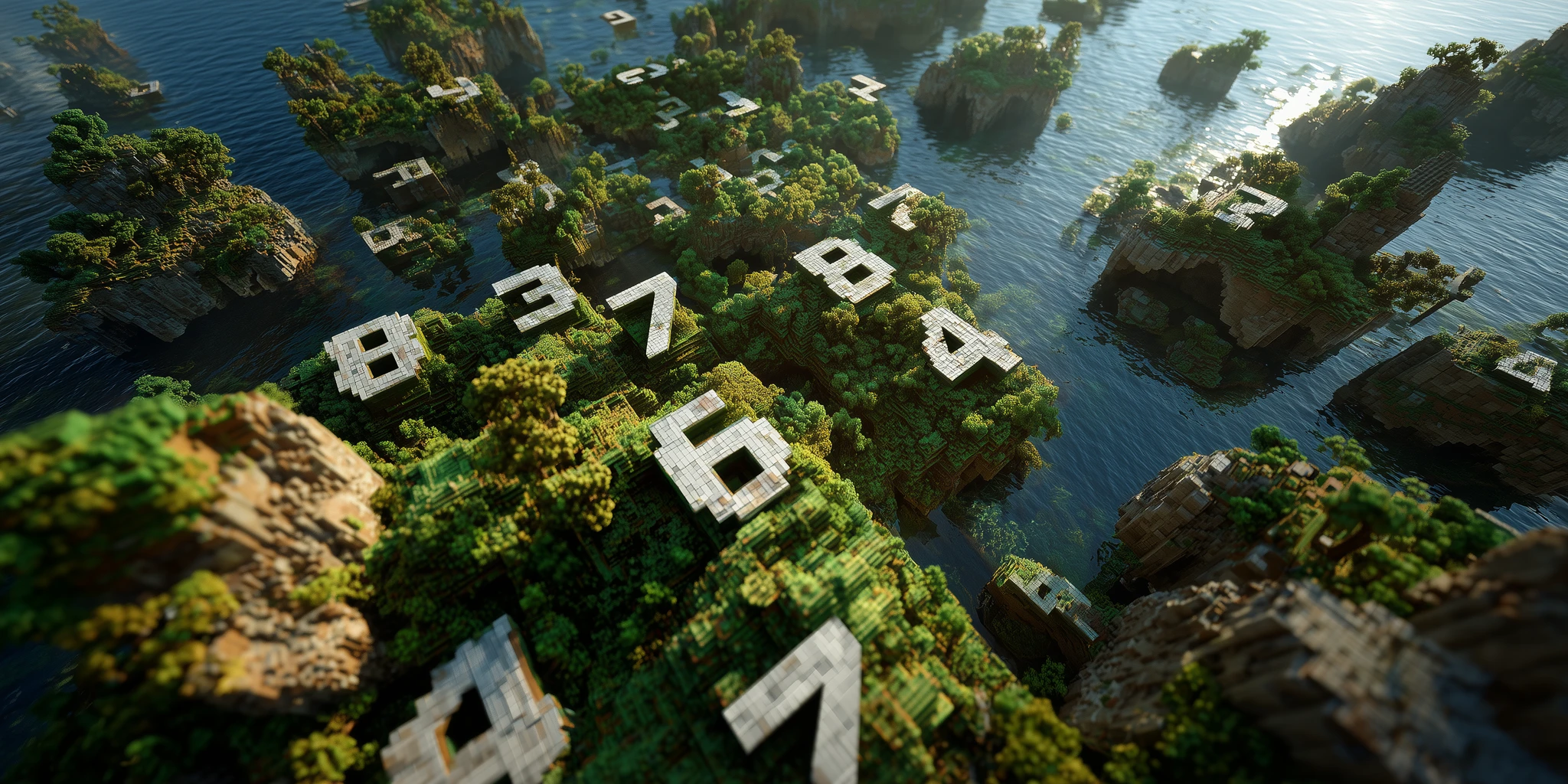
Will your civilization be a peaceful utopia, a military superpower, or something the world has never seen before? You’ll express your vision through a Minecraft build, a D&D campaign, a board game, a novel, or even a 3D model—whatever medium best brings your ideas to life. Along the way, you’ll sharpen your skills in research, writing, project planning, and collaboration.

In the end, you’ll present your civilization and see if it has what it takes to stand the test of time.
Questbound

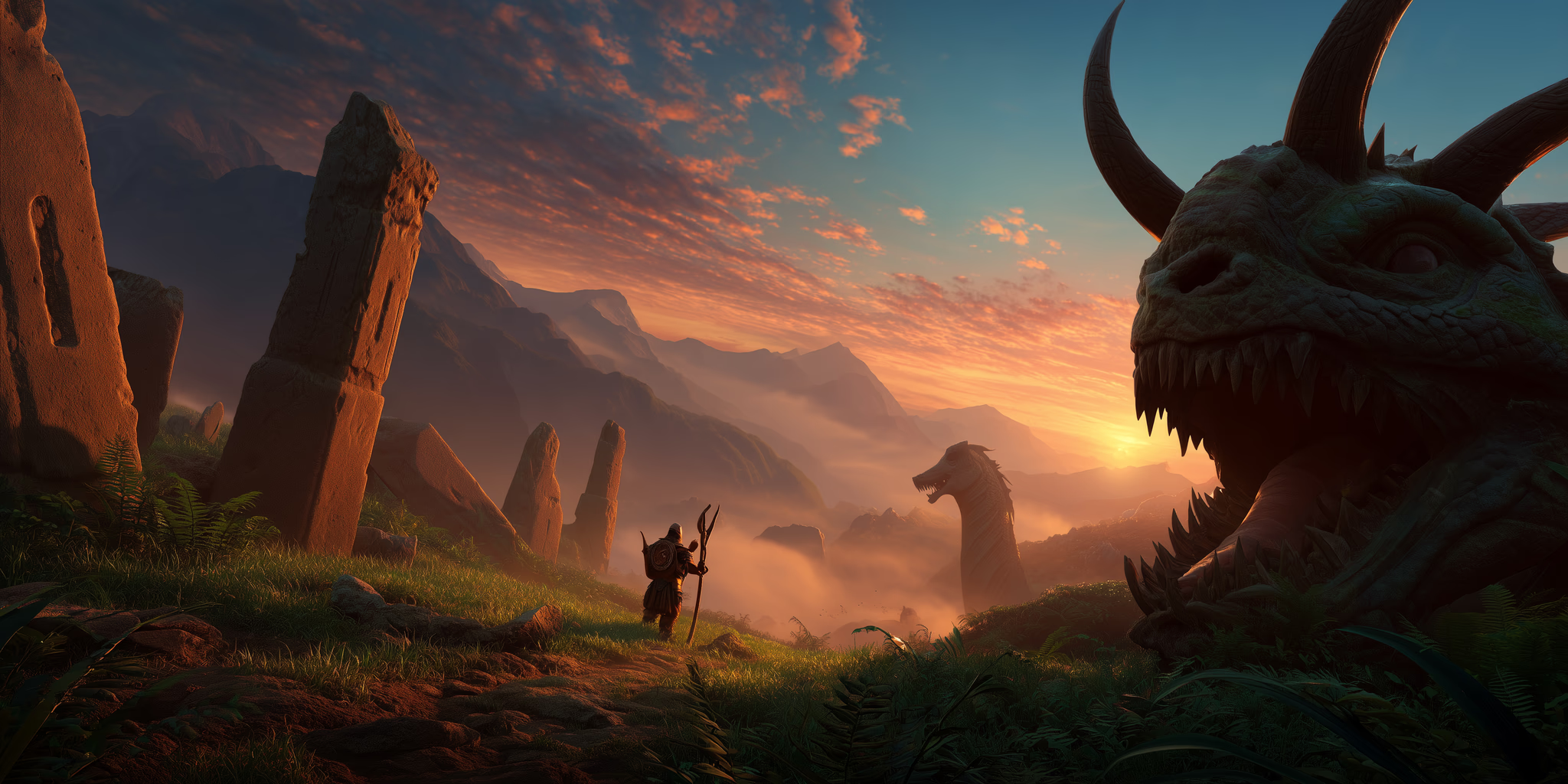
Explore the Hero’s Journey—a timeless storytelling framework—through the lens of ancient civilizations and world literature. From the trials of Greek demigods to the wisdom of Egyptian deities and the courage of African folk heroes, you’ll uncover how cultures across time have shaped the classic hero’s tale.

Through interactive readings, discussions, and creative projects, you'll compare heroic stories from diverse traditions, examining their themes, challenges, and transformations. The course culminates in an exciting storytelling project where you’ll craft your own original tale, inspired by the myths and journeys you've explored.
Camp Half Blood

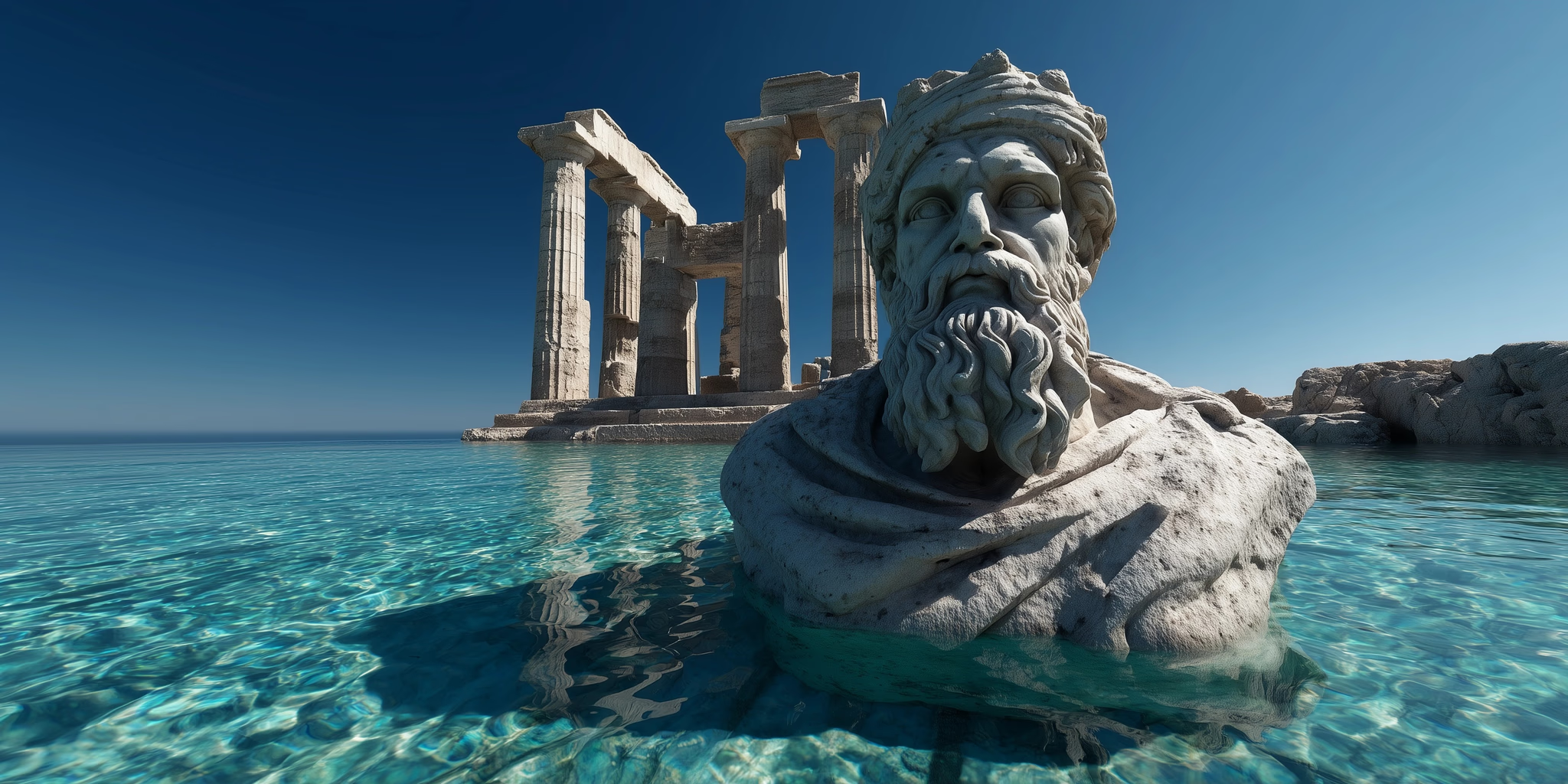
Greek mythology and Percy Jackson fans—your time has come to embark on an expedition to Camp Half-Blood! In this course, we’ll dive into Percy Jackson and the Lightning Thief by Rick Riordan, a thrilling fantasy novel about a modern teen who discovers his father is none other than the Greek god Poseidon.

Alongside our novel study, we’ll explore the world of Greek mythology, from the iconic gods and goddesses to epic myths and legendary monsters. You’ll tackle big questions like: What makes a hero? Why do cultures create myths? And what can these stories teach us about being human?

We’ll also analyze modern retellings in film, TV, and comic books that breathe new life into these ancient tales. By the end of the cycle, you’ll craft your very own original myth or creation story—your own contribution to the world of legend.
Sacred Journeys: Exploring Global Faiths and Cultures

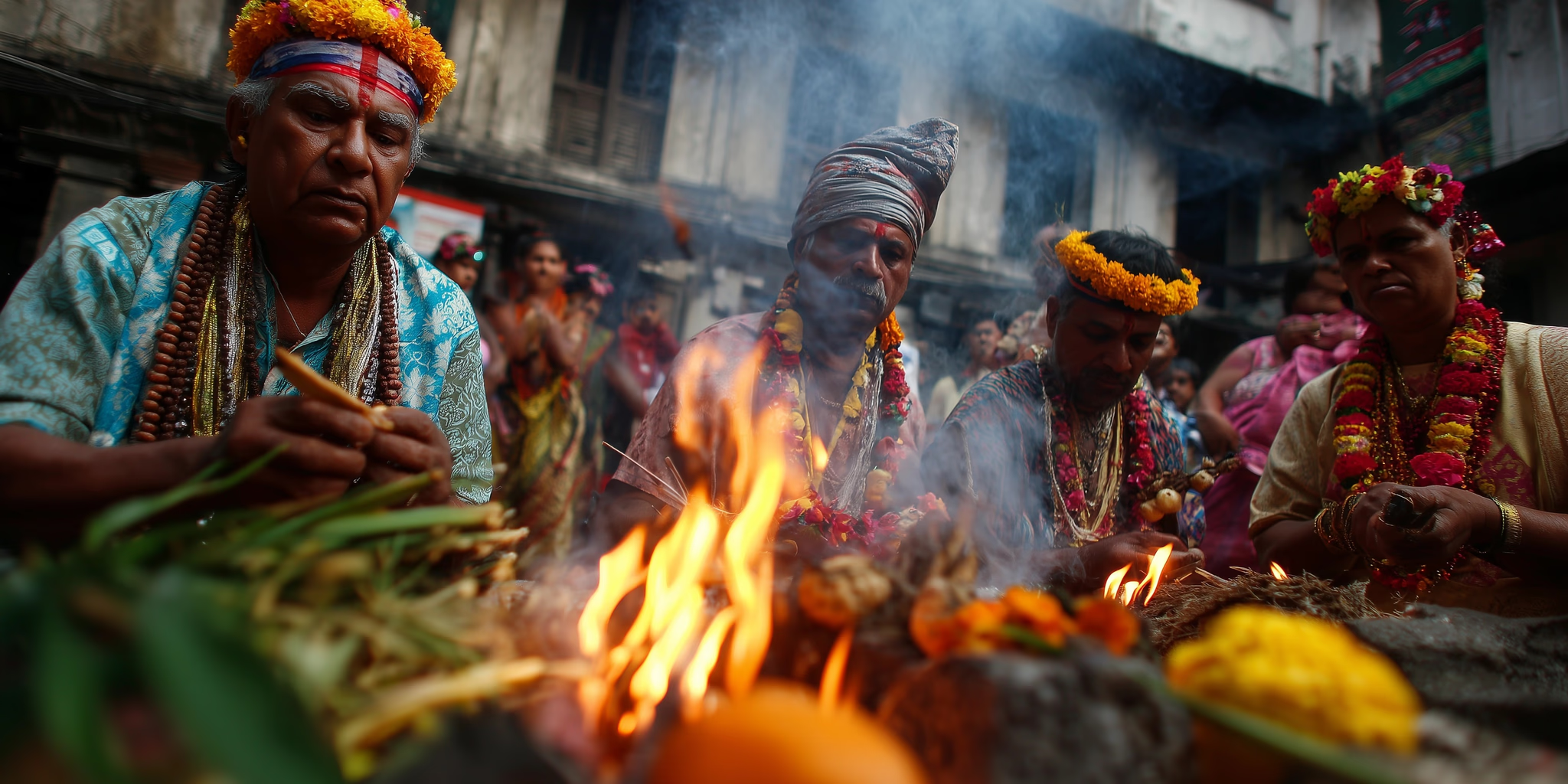
Get ready for an exciting adventure around the world—no passport required! Sacred Journeys invites you to uncover the fascinating traditions, sacred spaces, and powerful beliefs that shape cultures across the globe. From ancient temples to modern-day rituals, you’ll explore how people express their faith through art, music, festivals, and everyday life.

Step into the shoes of a pilgrim visiting holy sites, decode symbolic meanings, and create your own artwork inspired by religious traditions. Along the way, you’ll dive into big questions: How does faith influence history and society? What do different religions have in common? How do sacred practices shape the way people live?

Through hands-on projects, virtual explorations, and real-world connections, you’ll develop a deeper understanding of global religions—and the shared values that unite us all.
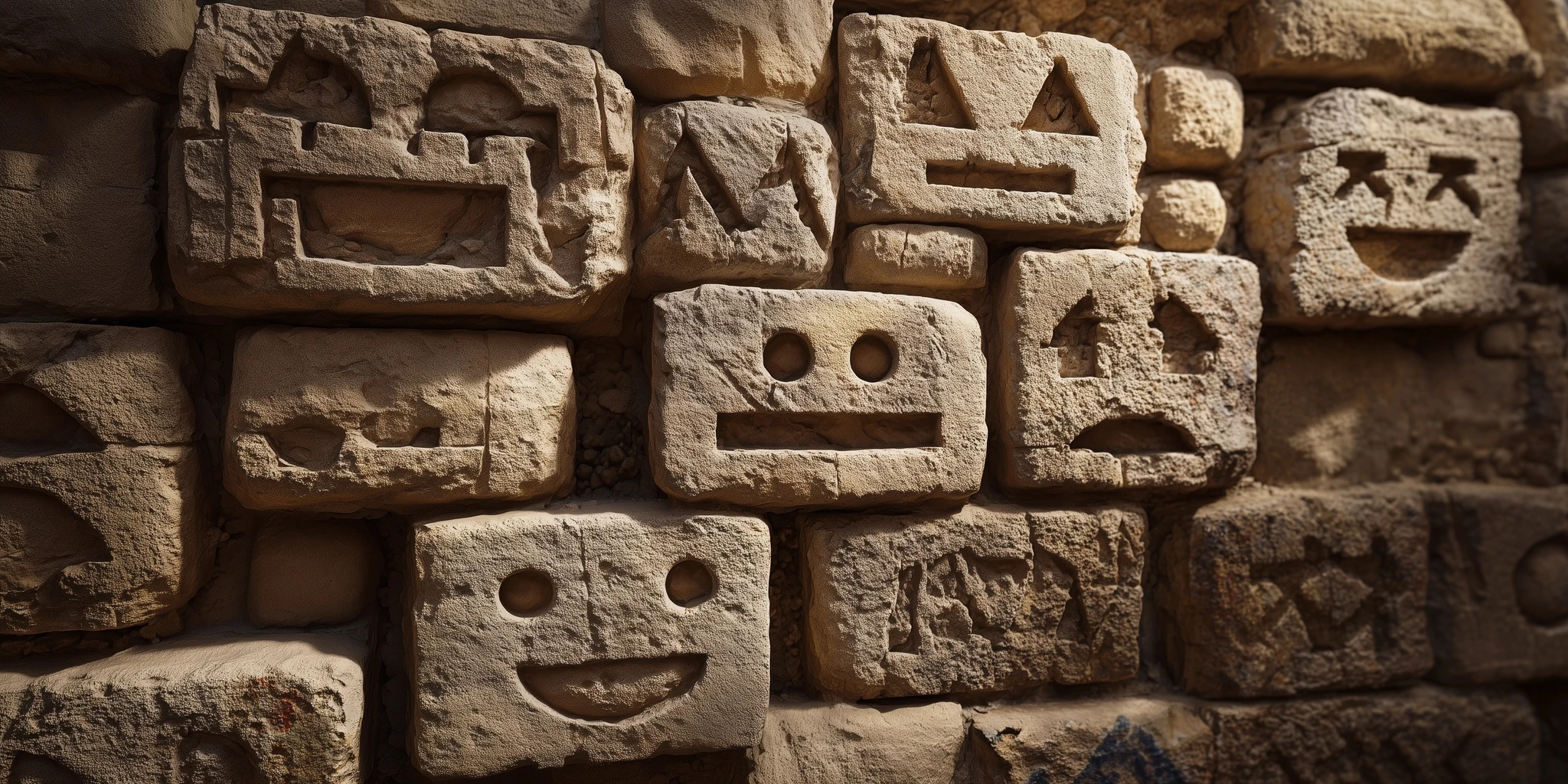
From Empires to Emojis

It’s 1000 B.C.E., and you’re an artist newly arrived in a great ancient empire—perhaps Egypt, China, or the Indus Valley. Your mission? To create a powerful new symbol that represents an idea your society values deeply.

You’re ready to start—but first, you need to understand the world around you. What matters to this civilization? How will people interpret your art? To find out, you’ll dive into the real symbols and icons left behind by ancient artists.

Why are cats so prominent in Egyptian tombs?
Why did a Chinese emperor commission thousands of life-sized soldiers to be buried with him?

In this class, you’ll explore the beliefs, events, and cultures of ancient societies through the lens of symbolism. Along the way, you’ll develop your research skills, sharpen your writing, and unleash your creative vision as you design your own meaningful icon.

STEM
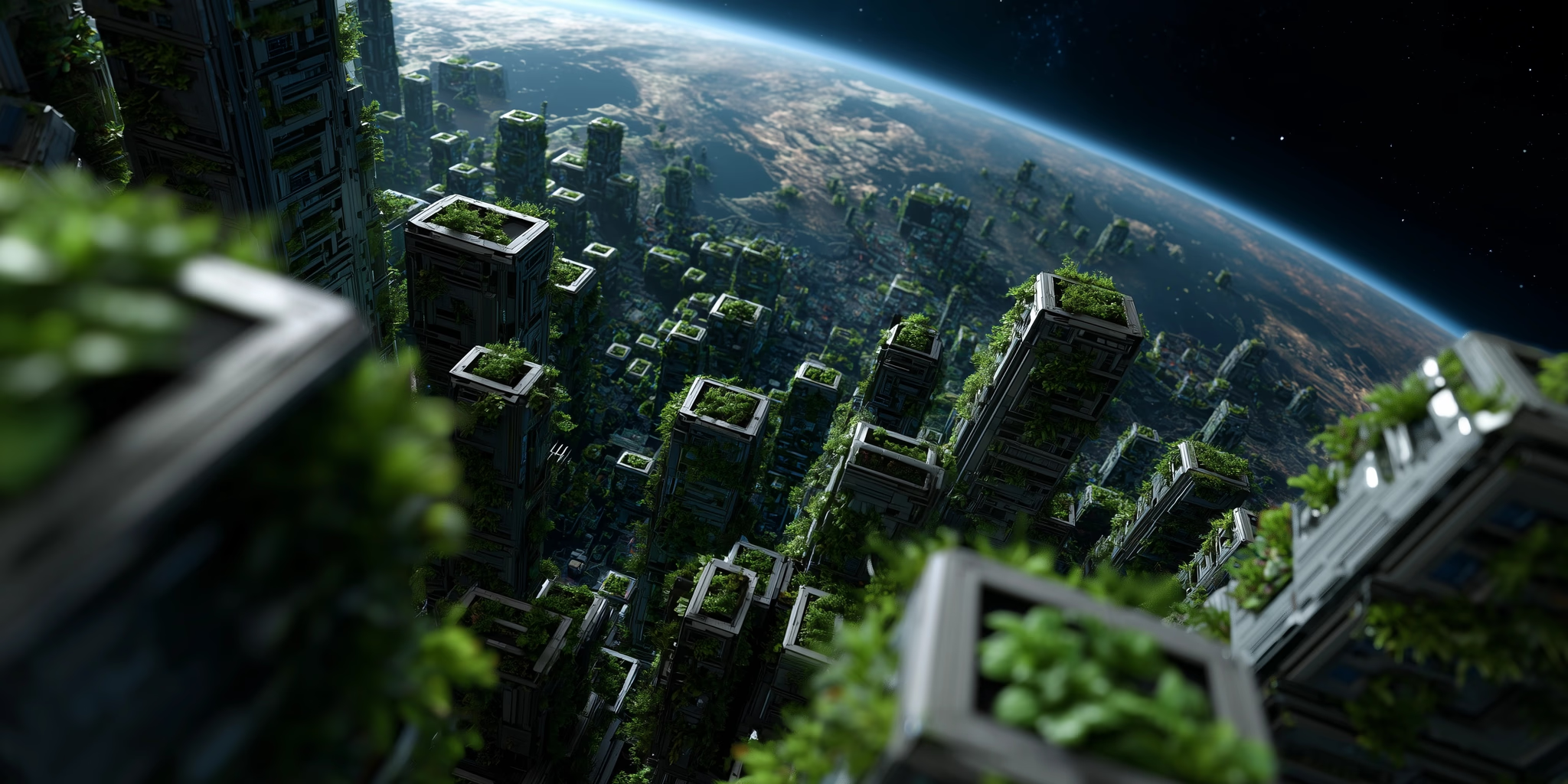
Galactic Eco Engineers

Get ready to design a home that balances sustainability with the bold challenges of the final frontier. First, you’ll explore what it takes to create an eco-friendly home right here on Earth—then, you’ll take your design to the stars, adapting it for life on a new planet.

What materials and systems would you need to survive on Mars, the Moon, or a distant exoplanet? How would you modify your home to handle extreme temperatures, limited resources, or low gravity?

In this course, you’ll apply earth science, environmental science, and math to design sustainable homes and communities. You’ll explore farming technologies like hydroponics, tackle real-world engineering problems, and think like a space architect.

From Earth’s ecosystems to the far reaches of space, discover how science, innovation, and creativity shape the way we live—now and in the future.
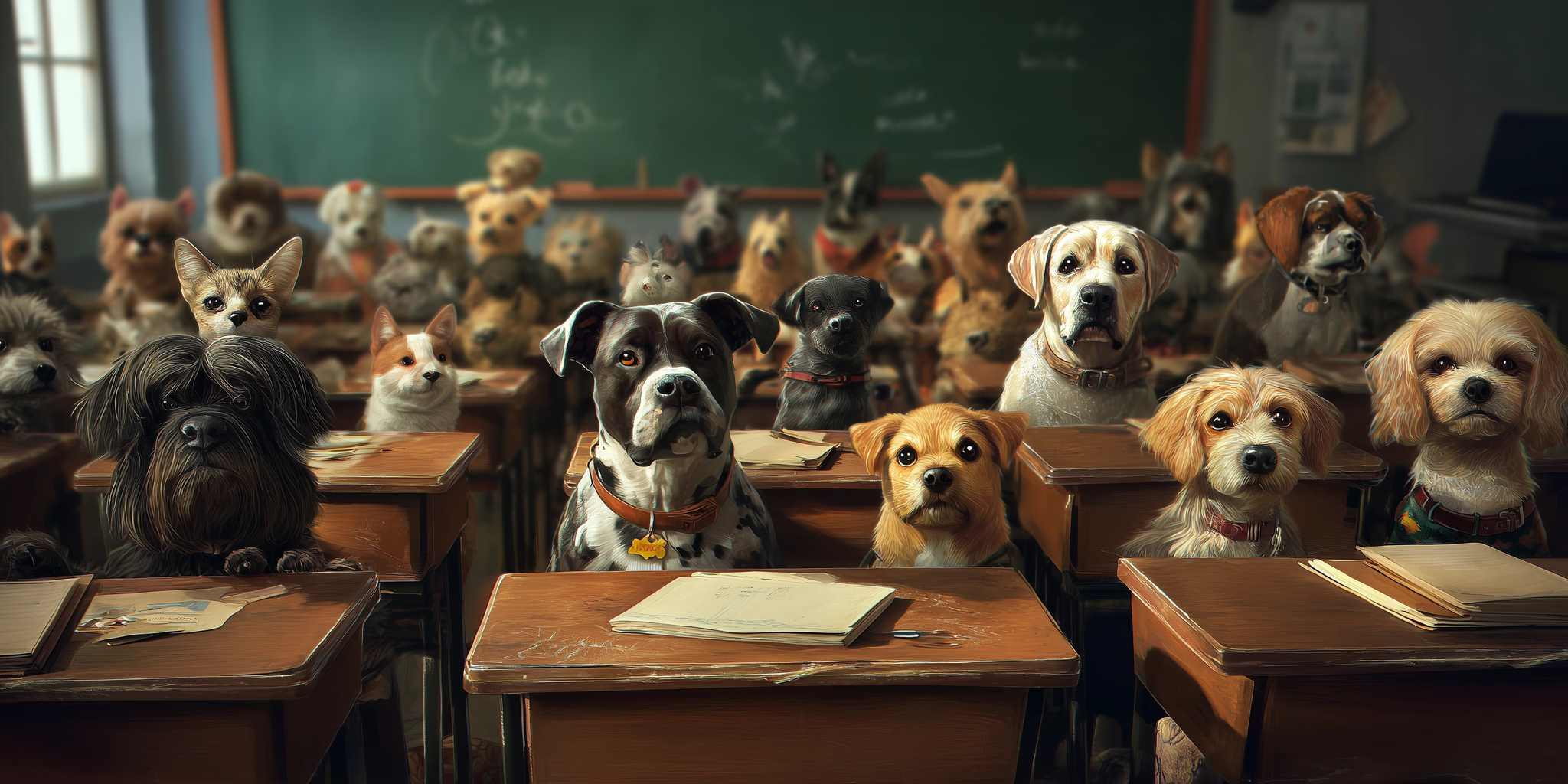
PETspedition

The Great PETSpedition is a life science expedition that uses pets as an entry point to explore biology, behavior, and human-animal relationships. Students investigate body systems, domestication, artificial selection, and animal intuition while developing skills in project management, scientific inquiry, and communication.

The expedition is designed to be hands-on, curiosity-driven, and flexible, with final projects ranging from veterinary case studies to pet care guides and ethical shelter designs. It’s a playful yet rigorous approach to life science that meets students where they’re at—through the animals they know and love.
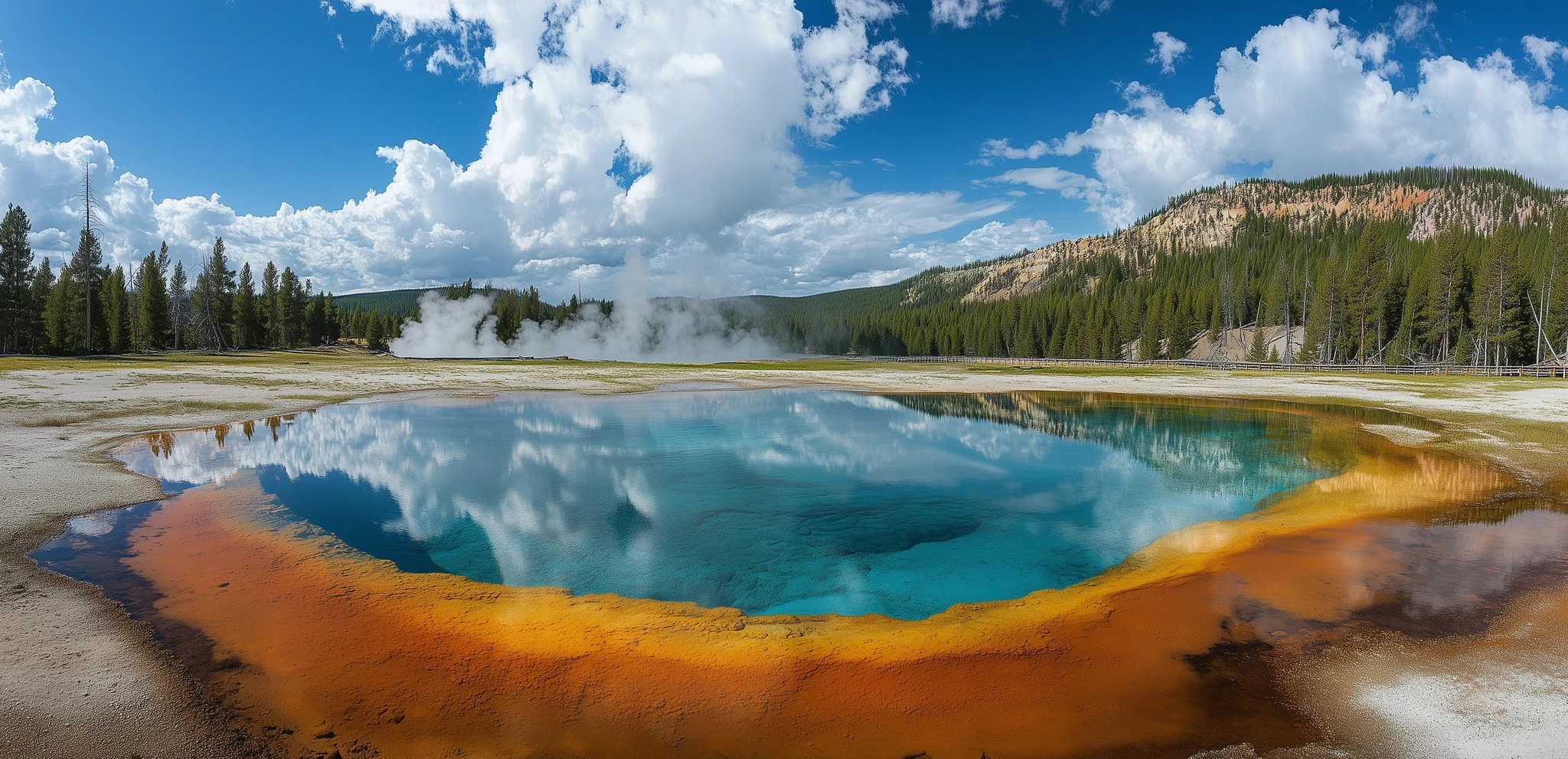
Yellowstone

Yellowstone and other ecosystems have a delicate balance... but can an apex predator change the entire dynamic?
This expedition explores the historic reintroduction of gray wolves to Yellowstone National Park in the mid-1990s and the profound impact it had on the park’s ecosystem, local communities, and national environmental policy.

Students will examine the ecological concept of a trophic cascade—the ripple effect predators have throughout an ecosystem—and how predator-prey dynamics influence populations of elk, beavers, and even plant life.

This expedition offers a comprehensive look at one of the world’s most renowned wildlife conservation efforts, highlighting both its ecological significance and the real-world challenges it continues to face.
Rube it Ralph

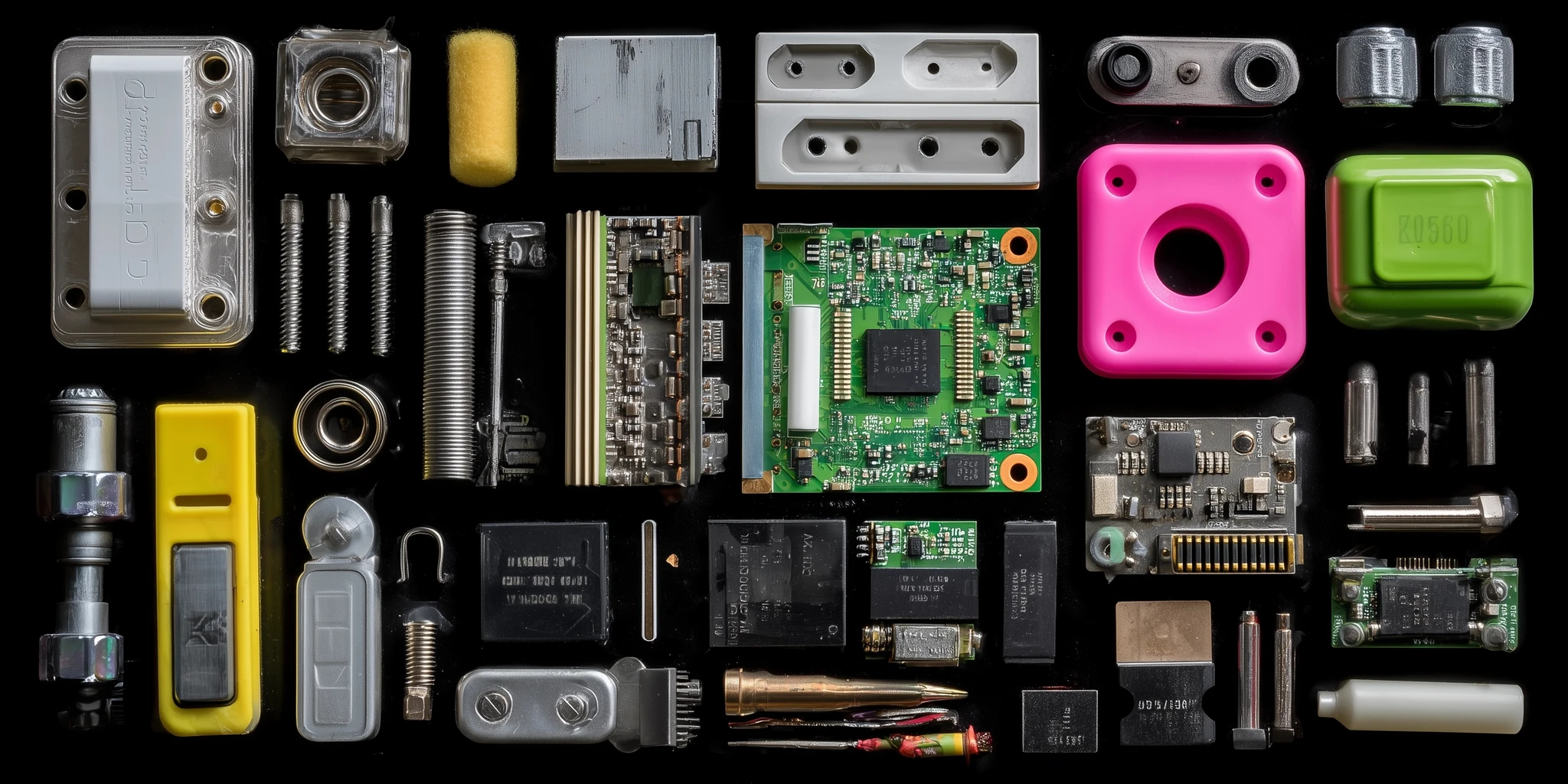
Explore the core concepts of engineering by dissecting everyday devices to discover how they work—from simple machines to circuits and electrical components. Through hands-on teardowns, you’ll gain insight into the inner workings of common technologies.

The course culminates in a final project where you’ll apply your knowledge to design and build your own Rube Goldberg machine, integrating both mechanical and electrical elements to showcase your creativity, engineering skills, and problem-solving abilities.

Let's go to Space Camp!

Over 12 weeks, they’ll explore the laws of physics and space science to understand how objects move through space, how astronauts live and work on the International Space Station, and how engineers design the technology that gets us there. Students will take part in astronaut training simulations, design challenges, and interactive exhibits that bring space science and engineering to life.

With a mix of hands-on experiments, collaborative problem-solving, and design thinking, students will tackle real-world challenges that astronauts face. This expedition culminates in a final project where students pitch their own space-ready invention, product, or experiment—designed to survive the extremes of space.

Math

Bringing Ideas to Life

In this cycle, you’ll take on real-world roles like club treasurer, event planner, and cookbook creator. You’ll use math to manage budgets, plan exciting trips, and perfect recipes. Discover how math helps you make smart decisions and turn your ideas into reality!

As a club treasurer, you’ll manage a budget for a school club—deciding how to allocate funds for supplies, events, and activities—while applying math skills to make cost-effective choices. Next, plan the Ultimate School Tour by designing a trip itinerary for a meet-up in your area, using math to organize transportation, meals, activities, and timelines.

Finally, contribute to a Community Cookbook by using a family recipe or creating your own. You’ll apply math to calculate ingredient costs, convert measurements from fractions to decimals, and scale recipes to different serving sizes.

Mission Possible

Ready to turn your dreams into reality? In this expedition, you’ll choose a personal goal that excites you—whether it’s reading more books, mastering an instrument, saving money for something special, or building your fitness routine.

As you track your progress, you’ll use math to uncover patterns, crunch numbers, and see how small changes can lead to big results. From calculating totals and averages to comparing progress with benchmarks and projecting your success, you’ll become a pro at using decimals, fractions, ratios, and percentages to plan and achieve.

By the end, you’ll not only reach your goal but also have a personalized roadmap showing how math helped you get there. It’s time to take charge of your goals and see how math can power your progress!
The Campus of Tomorrow

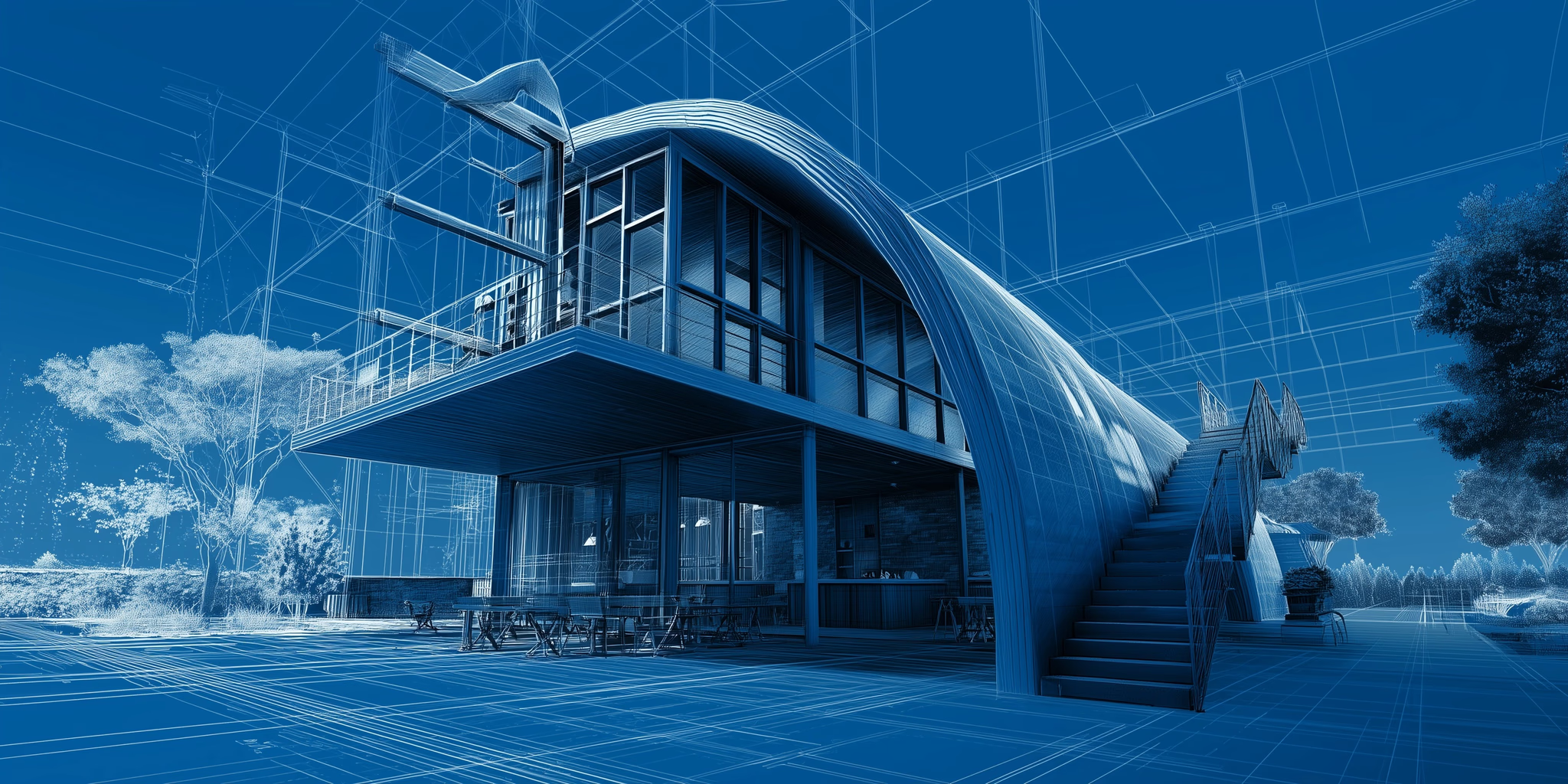
What if you could design the perfect home for The Classical Academies?

Create a virtual campus where every space fuels creativity and connection. From classrooms to chill zones, use math to bring your vision to life and redefine what a school can be!

In this project, you’ll design the ultimate virtual campus for The Classical Academies—a space that reflects our innovative spirit and inspires creativity. This is your chance to reimagine the perfect online learning hub.

Start by planning a budget, using math to make thoughtful decisions about tools, resources, and designs. Then, map out your virtual campus by designing spaces like classrooms, collaborative lounges, and creative studios using geometric shapes, angles, and coordinates. Finally, apply your math skills to calculate areas, volumes, and surface areas—ensuring every part of your campus is functional, efficient, and engaging.

By the end, you’ll present your vision for the future of The Classical Academies—a math-powered masterpiece that brings our community together in a virtual world like no other!
7th Grade Curriculum

Humanities

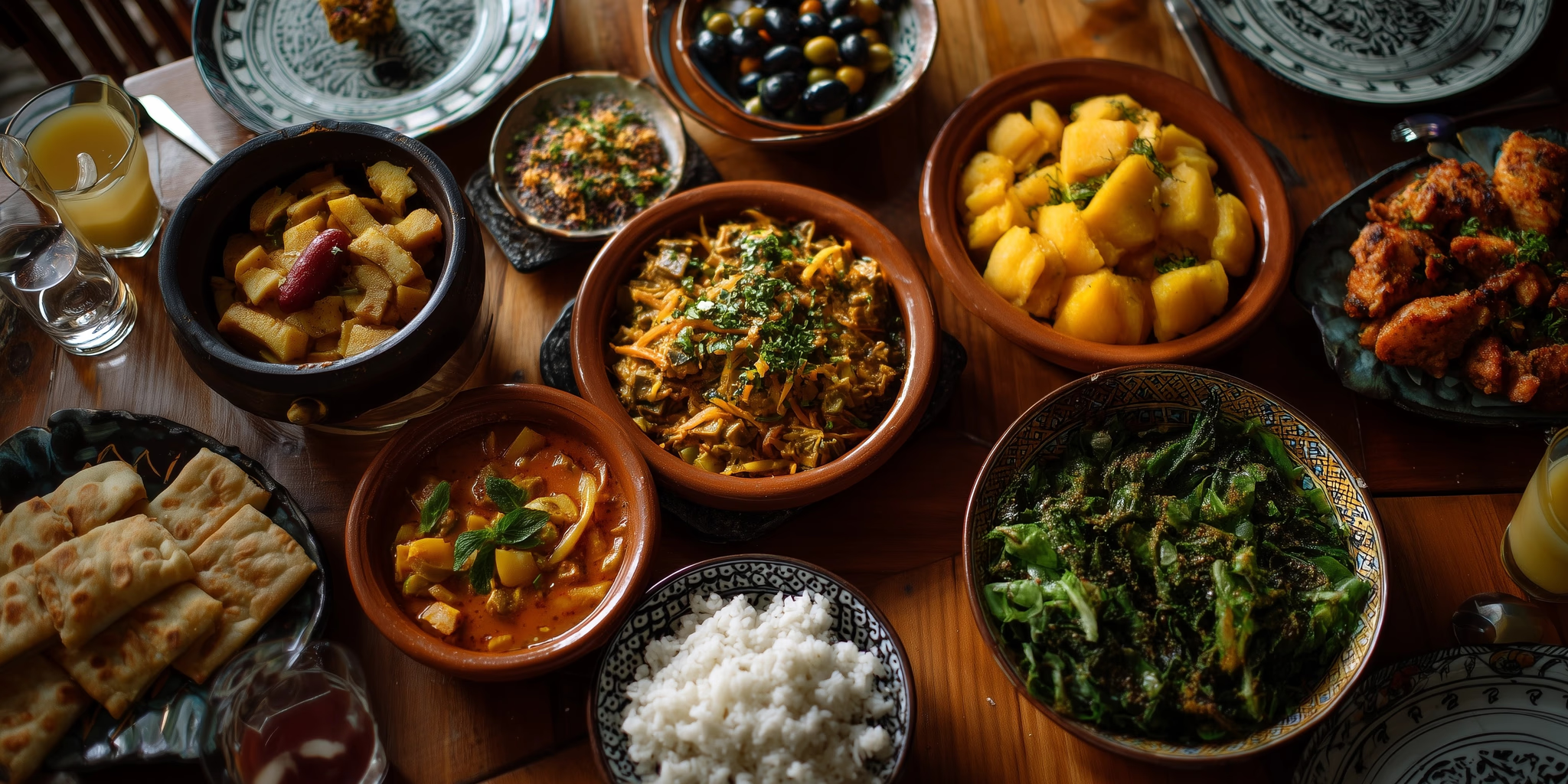
Feasts, Faith and Identity

Ever dreamed of creating your own empire, designing towering cities, or shaping the laws of an entire society? In this course, you’ll become the architect of a brand-new civilization, drawing inspiration from some of history's most influential societies—like the Inca Empire, Ancient Rome, Medieval Japan, and modern America. Each week, you’ll uncover the secrets of past civilizations, take part in interactive challenges, and apply your knowledge to bring your own world to life.

Will your civilization be a peaceful utopia, a military superpower, or something the world has never seen before? You’ll express your vision through a Minecraft build, a D&D campaign, a board game, a novel, or even a 3D model—whatever medium best brings your ideas to life. Along the way, you’ll sharpen your skills in research, writing, project planning, and collaboration.

In the end, you’ll present your civilization and see if it has what it takes to stand the test of time.

The Life of a Medieval Teenager

What was it like to be a teenager in the Middle Ages? In this interdisciplinary humanities class, students will read the historical novel Catherine, Called Birdy by Karen Cushman to explore the everyday life, struggles, and spirit of a young girl living in 13th-century England. As Catherine navigates her role in society, family expectations, and dreams of independence, students will examine broader themes of gender roles, social class, religion, and coming of age in the medieval world.

To deepen understanding and broaden perspectives, the course will compare Birdy’s experiences with those of young people in Medieval Japan and West African civilizations such as Ghana and Mali. Students will explore questions such as:

How did gender and family expectations shape lives in different parts of the world?
What role did religion—Christianity, Buddhism, Shinto, and Islam—play in daily life and identity?
How did social class and political power affect opportunities for young people?

Using literature, primary sources, historical documents, and creative projects, students will analyze similarities and differences across cultures and gain a global view of adolescence and society during the Middle Ages. Activities may include writing journal entries from the perspective of a young samurai or a merchant’s child in Timbuktu, comparing coming-of-age traditions, and mapping connections between trade, religion, and power.

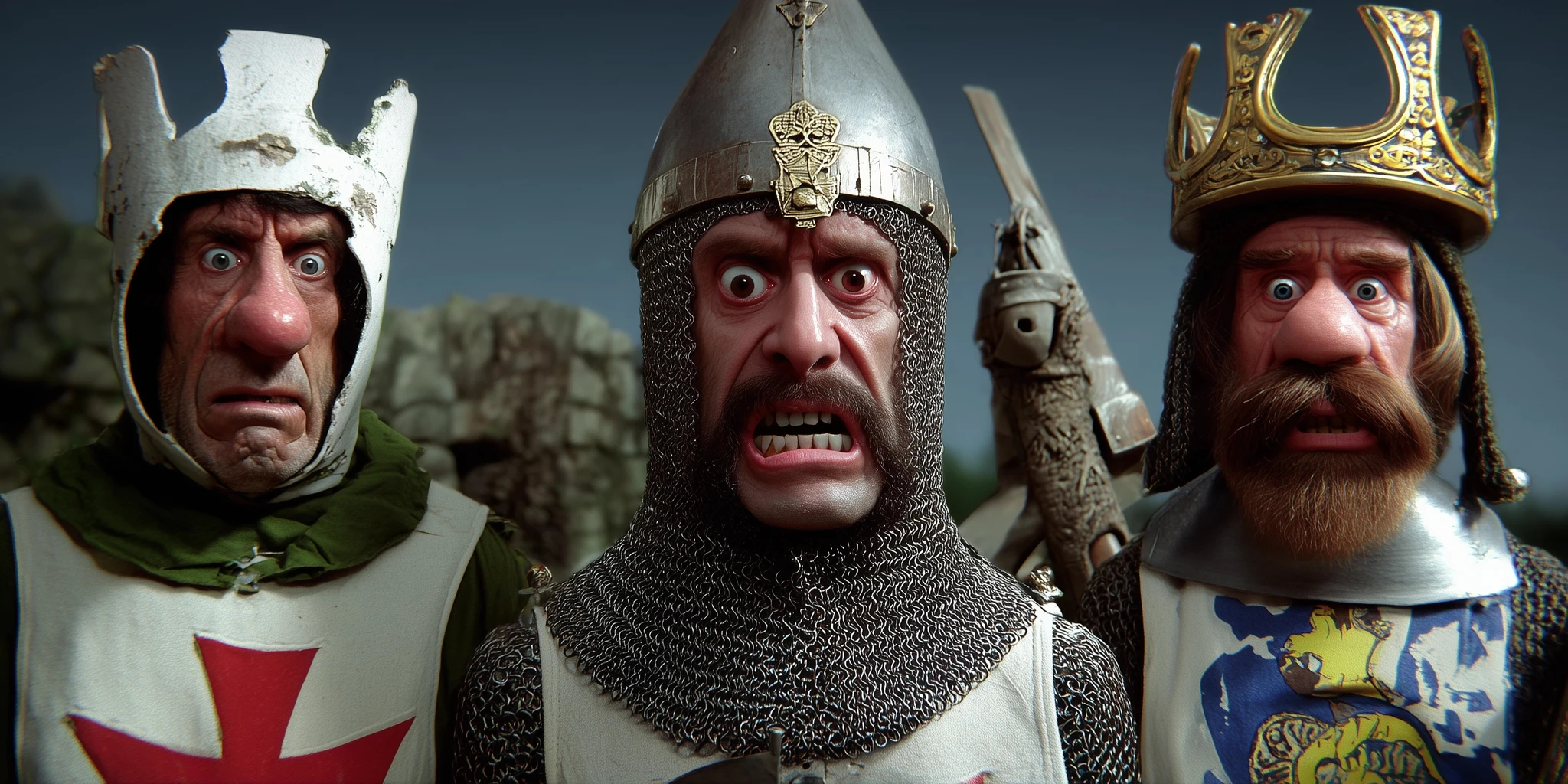
Spamalot! Monty Python's take on the Middle Ages and Medieval Times

Learn about the Middle Ages and Medieval Times through the lens of one of the funniest comedy groups on the planet—Monty Python! Spamalot, the satirical Broadway musical about King Arthur, the Knights of the Round Table, and the Quest for the Holy Grail, brings to life themes of class struggle, the influence of the Church, and the power of the monarchy in Europe.

You’ll read the play and dive into essential questions like:

  • When should one follow tradition, and when should one break it?
  • Who should hold power?
  • How does religion influence the institutions and daily life of civilizations?

By comparing real historical events to their comedic portrayals, you'll gain insight into how satire can be both entertaining and revealing. For your final project, you'll write and perform your own satirical scene inspired by history or current events, design a coat of arms, and—if you're brave—survive an encounter with a killer rabbit.
Come join our quest to Spamalot!

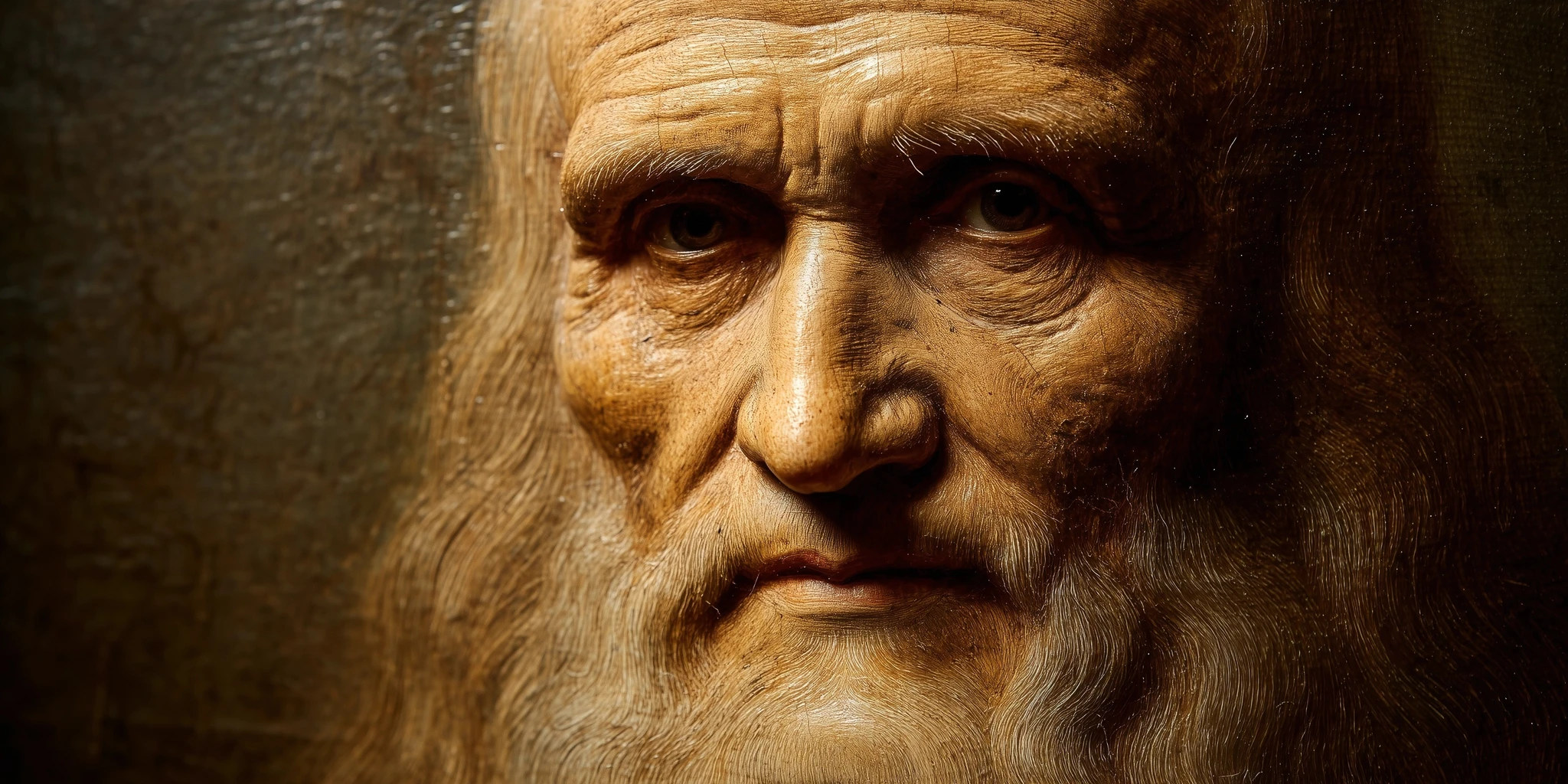
Becoming DaVinci

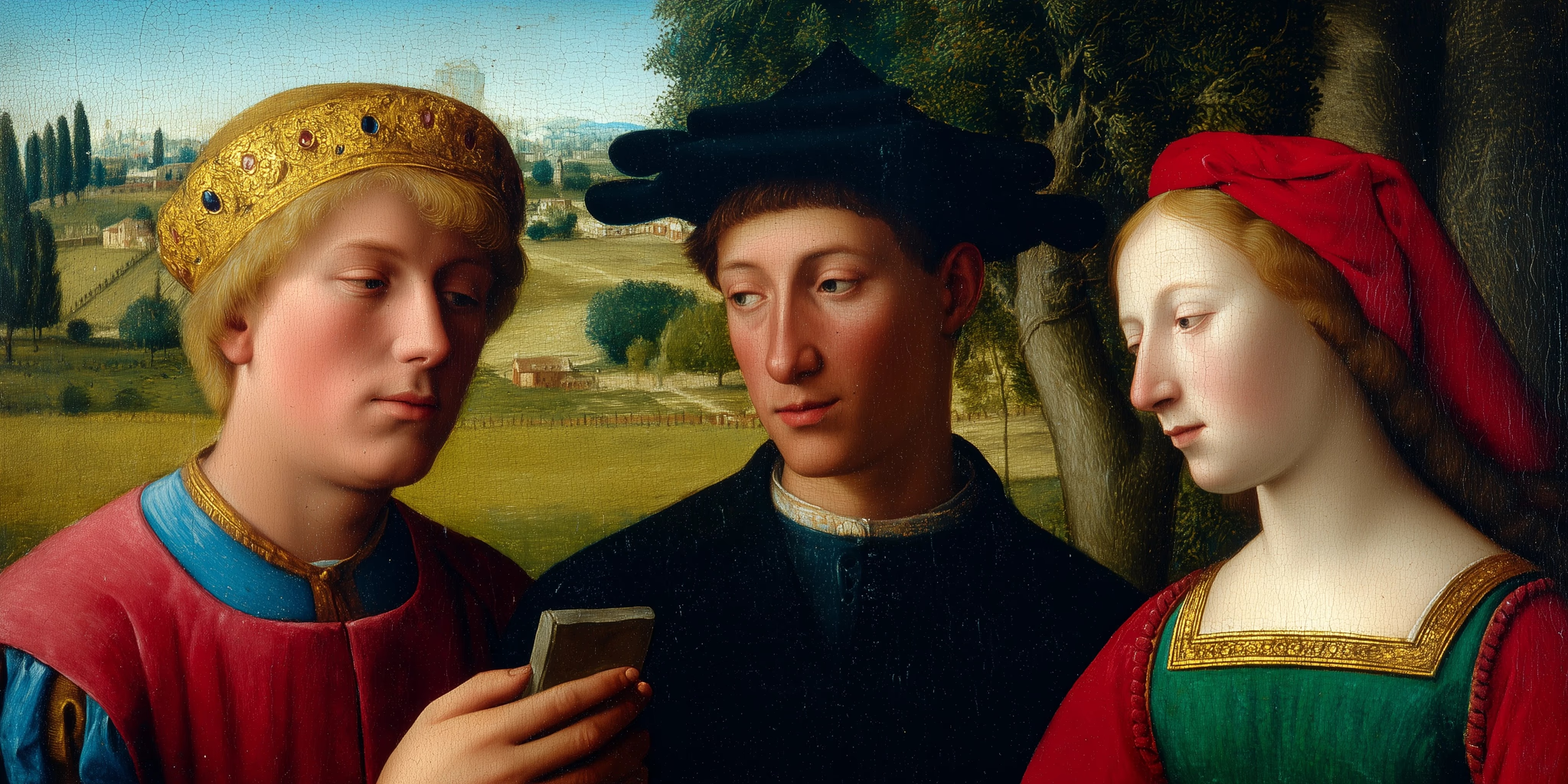
Why do millions of people travel across the world just to see the Mona Lisa? What made Leonardo da Vinci such a legendary artist, inventor, and thinker? In this hands-on, creative class, you’ll step into da Vinci’s shoes and explore how one person’s curiosity can change the world!

We’ll dive into Leonardo’s life during the Italian Renaissance—a time bursting with brilliant ideas, stunning art, and bold discoveries. Using art and architecture as our guide, we’ll explore how Renaissance thinkers designed buildings, painted masterpieces, and imagined flying machines centuries before airplanes existed. You’ll keep a digital notebook filled with your own sketches, inventions, journal entries, and fun historical facts.

But this isn’t just about Europe. While da Vinci was creating in Italy, powerful civilizations were thriving across the world. We’ll explore the empires of the Maya, Aztec, and Inca—discovering their extraordinary cities, temples, calendars, and artwork. You’ll see how creativity, technology, and belief systems shaped each civilization in unique ways.

We’ll also examine the Reformation, a time when people began asking big questions about religion, power, and change. How did these movements influence the modern world—and how might da Vinci have responded to them?

If you love to draw, build, imagine, or wonder how things work, this is the class for you. Get ready to think like a genius, create like an artist, and explore like a historian!

Gone Ghost Huntin’: Macbeth and the Supernatural

Why is Shakespeare’s Macbeth rumored to be cursed? Did Shakespeare really include authentic witch incantations in the script? And how do witches, prophecies, ghosts, and other paranormal elements shape the play’s plot and create its famously spooky atmosphere?

This expedition dives into these questions and more, with a focus on the eerie, otherworldly forces at play in Shakespeare’s shortest—and spookiest—tragedy. You’ll explore the supernatural beliefs of Shakespeare’s time and how those ideas still echo today. From witch trials to ghostly visions, we’ll uncover how fear and fascination with the unknown helped shape the story of Macbeth and Lady Macbeth.

As a bonus, you’ll get the chance to showcase your dramatic side—stepping into character roles and bringing the dark world of Scottish thanes, shadowy castles, and spectral warnings to life on stage.

Just be sure to bring your flashlight...

STEM

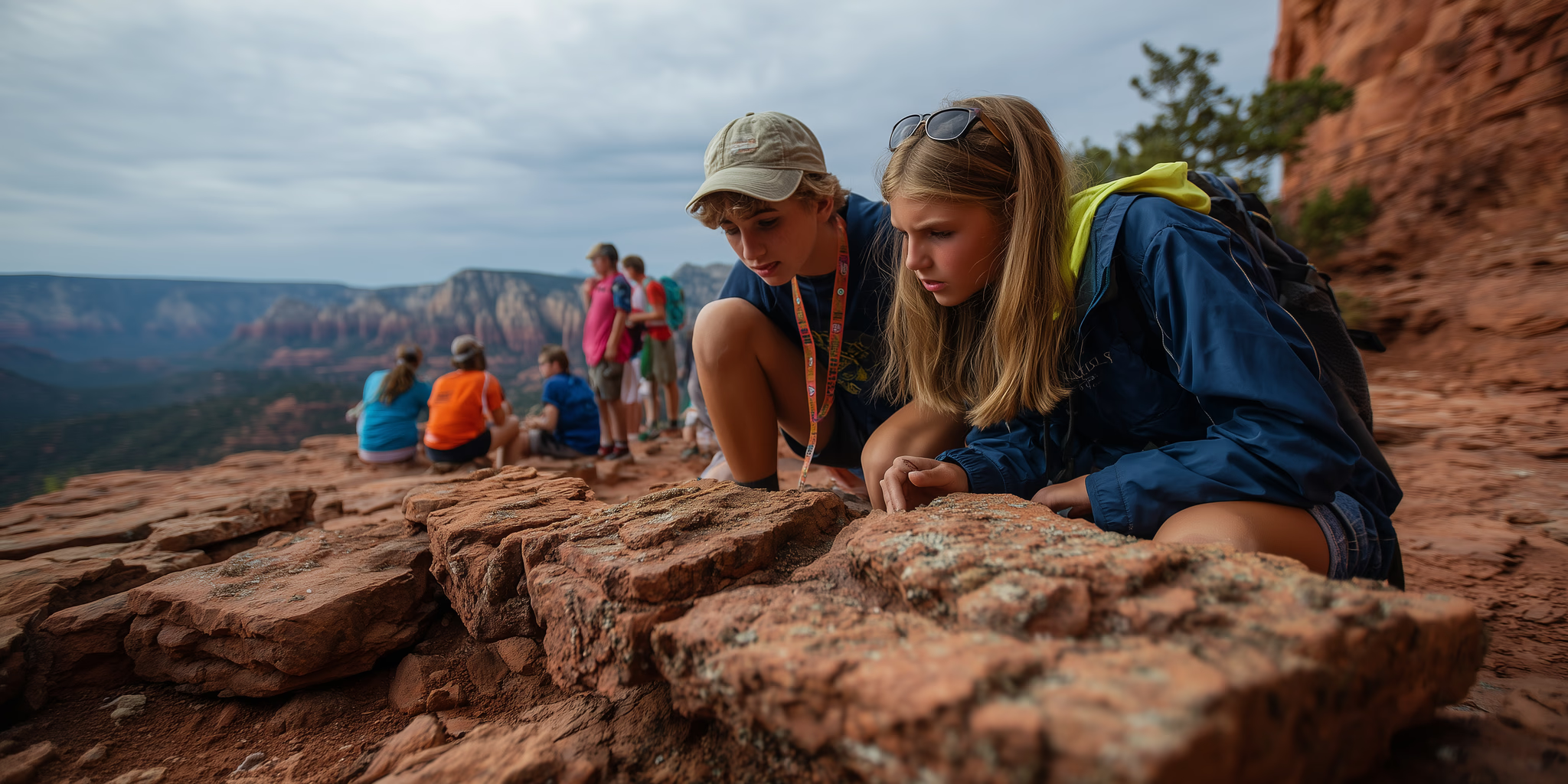
Geo Explorers

Ever wondered what makes your hometown (or any other place) unique? Put on your explorer's hat and grab your camera—it’s time to discover the hidden geological gems around you and show the world why your local area is worth visiting!

As you gain a deeper understanding of these places, you will create a compelling travel brochure that highlights the uniqueness of the locality—designed to attract virtual visitors from your class and boost awareness about the town’s natural beauty and significance. Through this project, which will include a sustainable tourism proposal, you will educate yourself, share the science and conservation of these areas, and tap into the entrepreneurs and marketers inside you!

In this expedition, you will venture outside to identify and research significant geological features within your local area or any area of interest. Learn about the science behind these features, explore the local weather and its impact on the land, and understand how to conserve these beautiful spots.

Wildcrafted

What if magical plant remedies were real?

This expedition blends real-world foraging with fantasy herbology. Students explore plant adaptations, systems in plants and animals, and the science behind both traditional and fictional remedies. We’ll investigate how plants grow, reproduce, defend themselves, and interact within ecosystems, while also exploring plant-based solutions for healing, sustainability, and survival.

Through hands-on experiments, creative design, and mythical inspiration, students will reimagine ancient and futuristic herbal wisdom.

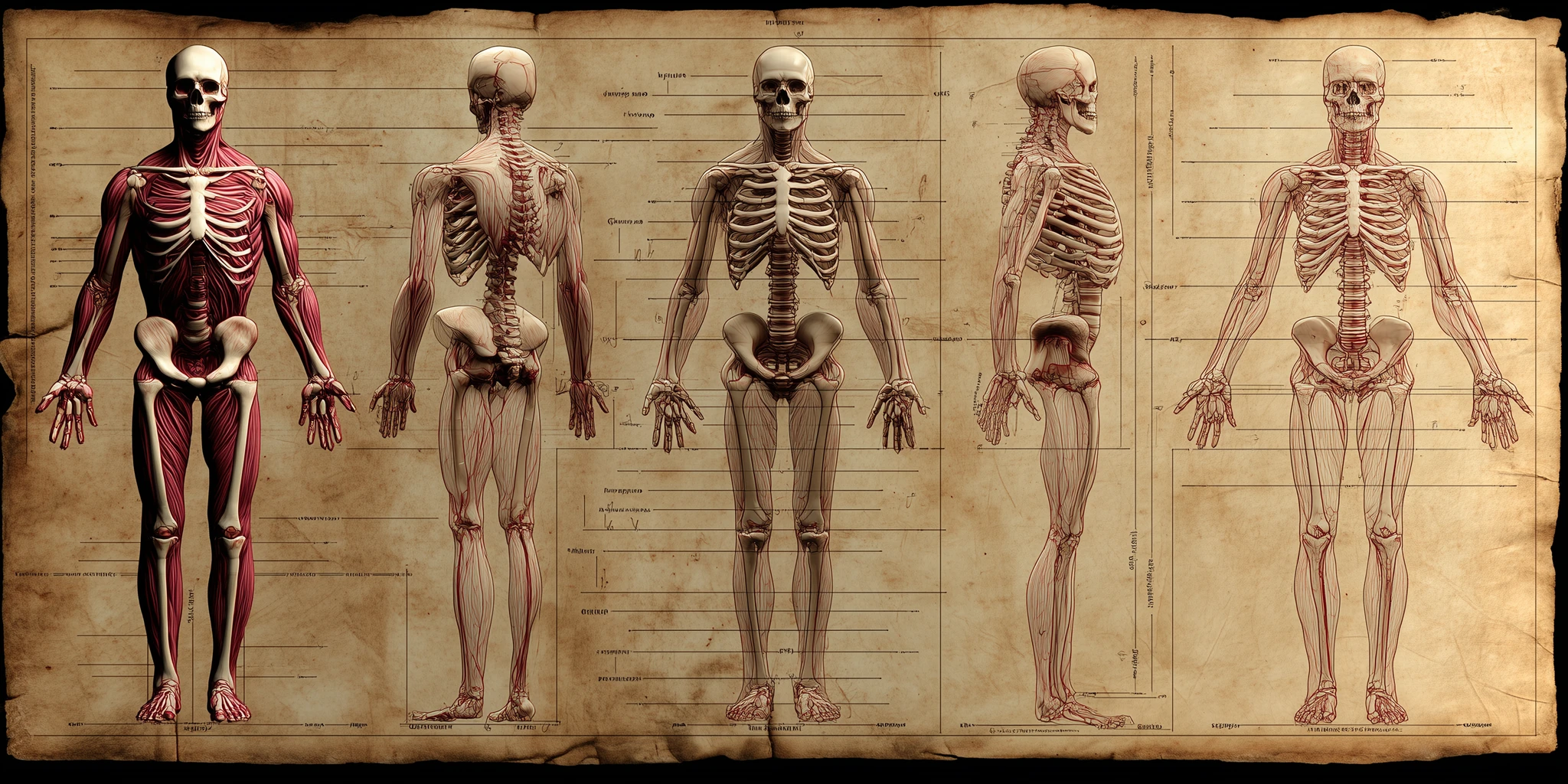
Our Body The City

Better health, safer cities, tastier food.

The key to the future may be inside us all. Ever wondered why your skin glows, how your taste buds recognize flavors, or which cells help send those messages to your brain? If your cells could talk, what would your brain cells say to your muscle cells? Join us on an adventure to understand the inner workings of the human body.

In this 12-week expedition, students will study the human body—its organs, tissues, and cells. But they won’t stop at basic understanding: they’ll develop creative projects as diverse as humanity itself. Imagine using the liver to design an ideal factory, cells as the foundation for new therapies, or the circulatory system as inspiration for a cutting-edge plumbing or transit network.

We’ll explore why the body makes millions of new cells every second, and why skin cells regenerate quickly while nerve cells do not. Along the way, students will draw analogies between the human body and what makes factories, companies, and cities function effectively. Each organ, system, and cell becomes part of a bigger metaphor.

Through hands-on investigations using Foldscopes, interactive discussions, and project-based learning, students will uncover the specialized roles of cells—and the real-world lessons they offer for innovation, health, and design.

Let's go to Space Camp!

Over 12 weeks, they’ll explore the laws of physics and space science to understand how objects move through space, how astronauts live and work on the International Space Station, and how engineers design the technology that gets us there. Students will take part in astronaut training simulations, design challenges, and interactive exhibits that bring space science and engineering to life.

With a mix of hands-on experiments, collaborative problem-solving, and design thinking, students will tackle real-world challenges that astronauts face. This expedition culminates in a final project where students pitch their own space-ready invention, product, or experiment—designed to survive the extremes of space.

Stomp Into Space

Ready for launch?

What does it take to beat gravity and explore the final frontier? In this expedition, you’ll get to launch your own stomp rockets while learning the science behind how they work! Come explore Newton’s Laws of Motion and see how they explain the forces that control your rocket’s flight. Learn how to calculate important things like speed, height, and how long your rocket stays in the air. Discover how air resistance and different surfaces (like concrete vs. grass) can change how your rocket moves and lands.

This fun, hands-on course will help you understand the math and physics that make rockets blast off!

Math

Snacking Rationally

Have you ever wondered what’s really in your favorite snack? How do you know if you're getting the right nutrients or just eating a lot of sugar? Math isn’t just for the classroom—it can help you break down food labels, balance meals, and even plan a diet that keeps you healthy and energized!

This cycle, you’ll become a Mathematical Nutritionist, using math to analyze what you eat and create a meal plan that fuels your body the right way. Let’s crunch the numbers—literally!

You will analyze nutrition labels using rational operations, ratios, and proportions to compare foods and make informed choices. You will calculate nutrient values, adjust serving sizes, and design a balanced meal using math-based analysis—detailing your grocery shopping list for your meal plan, designing your recipes for different serving sizes, and proving your meal plan fits a specific nutrition plan, such as meeting certain protein, sugar, or calorie intake requirements. It will all be contained within!

Data Detective

Have you ever wondered why some things feel random but still seem to follow rules?

In this expedition, we’ll dive into the world of probability and data to uncover the secrets behind chance and patterns. You’ll explore how to predict events using theoretical and experimental probability, create simulations to solve real-life problems, and even tackle tricky compound events like a pro.

But that’s not all—get ready to become a data detective! You’ll learn how to use random samples to describe populations, compare groups, and make informed decisions about the world around you. Whether it’s rolling the dice, designing experiments, or analyzing data from surveys, this expedition will give you the tools to see the hidden math behind everyday life.

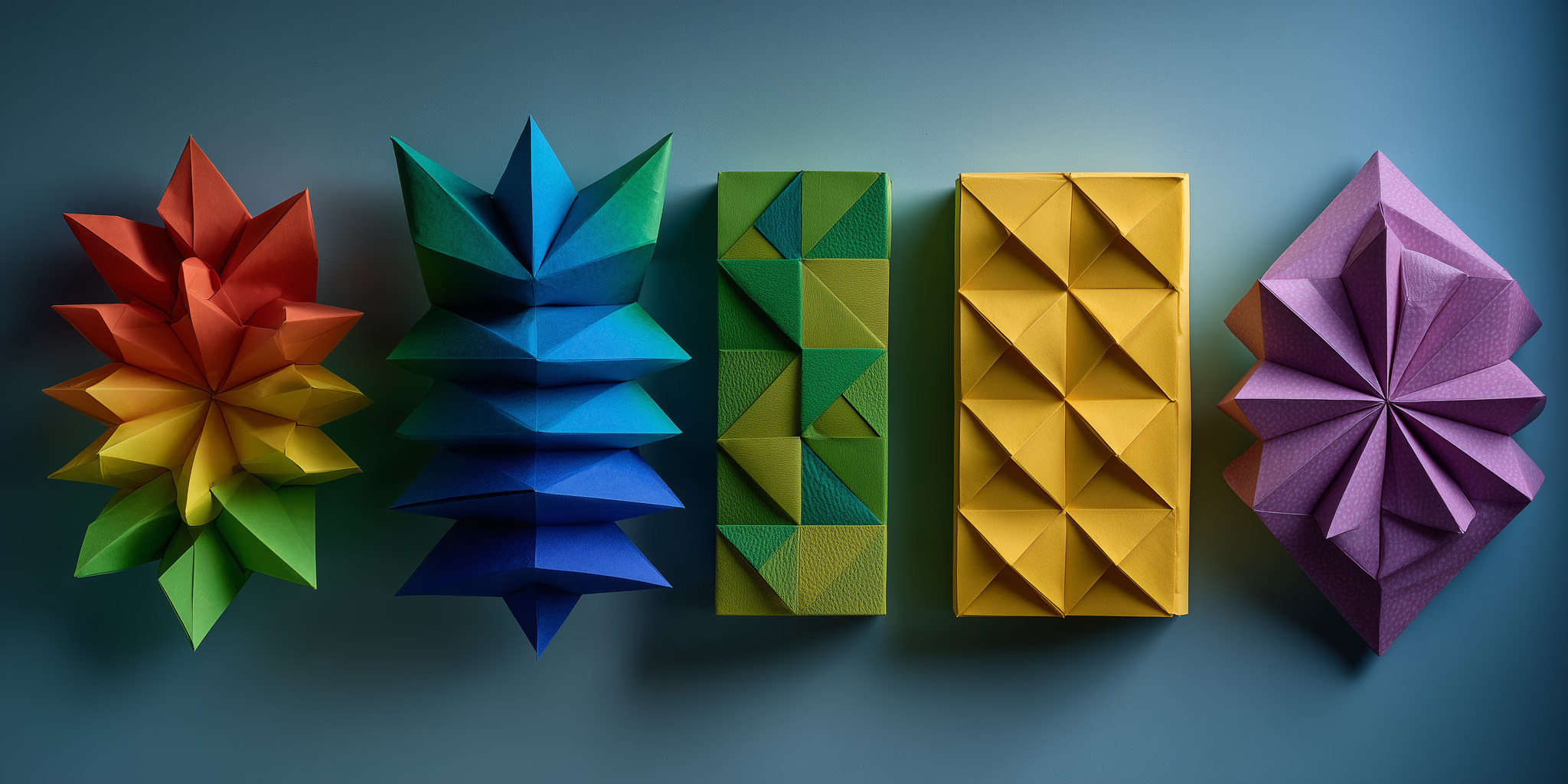
Folding Art with Math

Unlock the magic of origami by using math to fold, create, and calculate your way to beautiful paper sculptures!
In this expedition, students will explore the art of origami, learning how to create intricate paper models while applying mathematical concepts like equations, 2D geometry, and 3D geometry (volume).

You will fold your way through math and creativity, with each part of the project building on the last to create a final collection of origami pieces.

8th Grade Curriculum

Humanities

Where Your Stand

Ever wonder who lived here before the roads, the buildings, the schools—even before the first cities or states?
In this course, you’ll dig into the deep roots of your local land. You’ll find out:

Who lived here hundreds or thousands of years ago? What happened when settlers arrived? What names, languages, and traditions existed right where you’re standing? You’ll explore museums, interview experts, meet community members, and walk the actual land you're researching.

Your mission? To tell the real story of where you stand—and pass that knowledge on to others in creative, powerful ways.

It’s time to go back as far as possible and bring those stories forward.

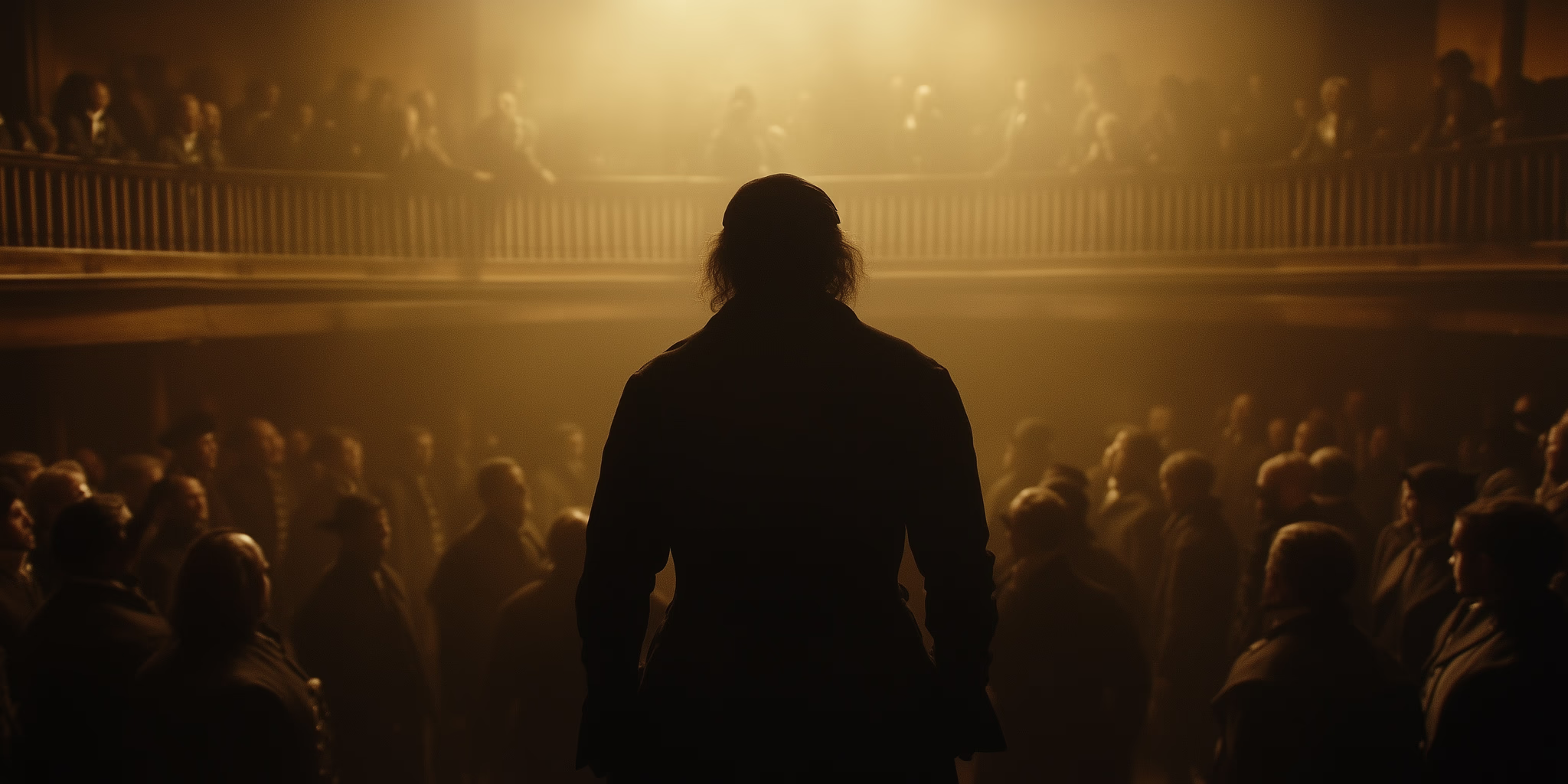
Revolution on Stage

Love history and theater? Step into the spotlight as we bring the American Revolution to life through musicals, skits, and creative performances! From Hamilton to 1776, you'll explore how music, drama, and storytelling turn history into show-stopping art.

Along the way, you’ll analyze scenes, learn literary and dramatic techniques, and dive into hands-on projects—including writing your own historical script or song. You'll also get creative with costume and prop design, learning how visual elements bring characters and eras to life on stage.

By the end, you’ll be ready to perform a mini-production that makes history unforgettable.

Fever 1793

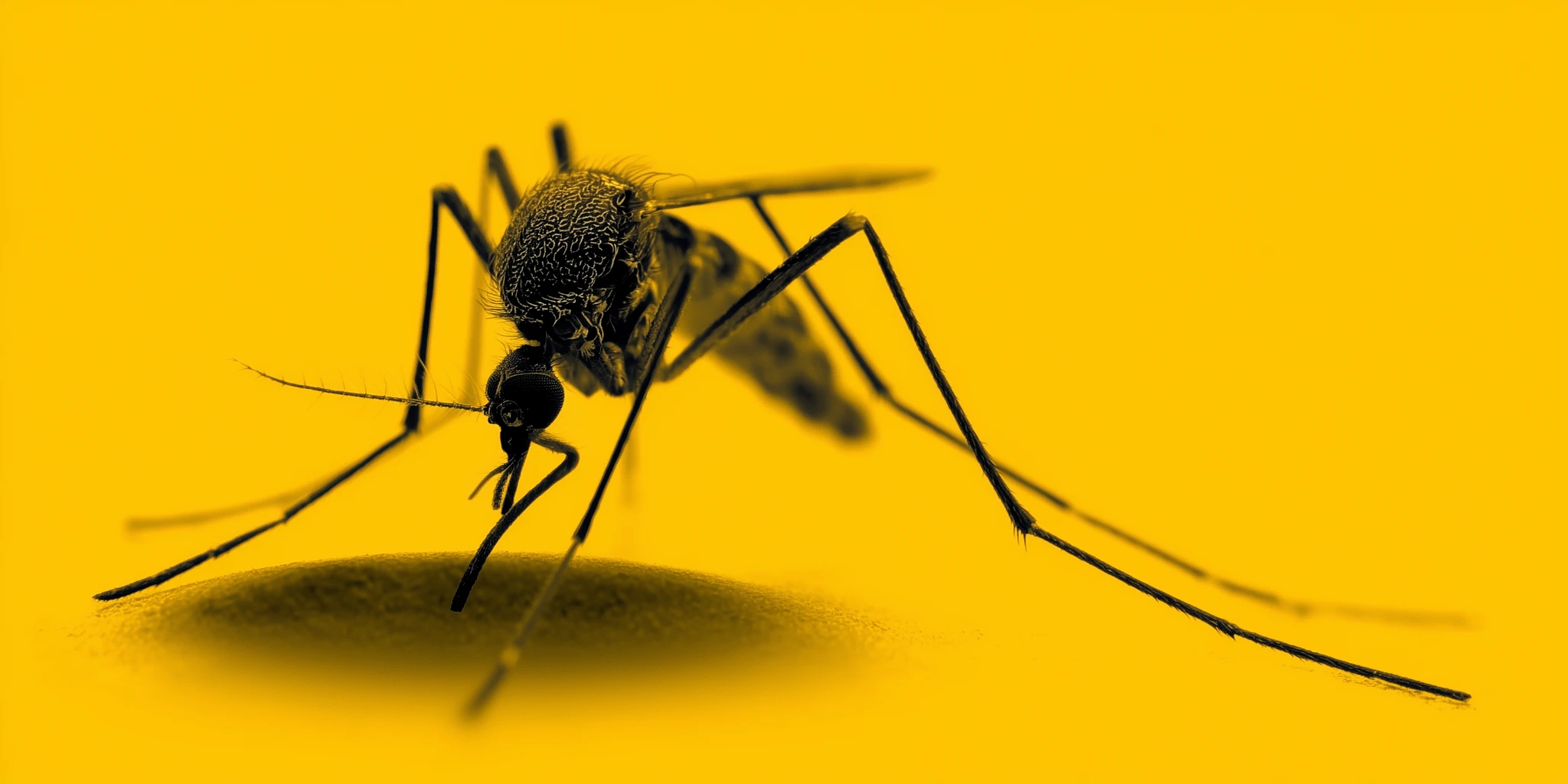
Prepare to dive into a world where history and imagination collide! Fever 1793 is a historical fiction novel set during Philadelphia’s Yellow Fever pandemic, written by Laurie Halse Anderson. Although this is historical fiction, it is based on the terrifying true story of the fever that killed upwards of 150,000 Americans during the Revolutionary period.

This expedition will be rich in discussion, and students are expected to read the assigned chapters before meetings, ready to discuss material with peers. During this expedition, we will be exploring elements of literature, honing our writing skills, and comparing and contrasting historical plagues—such as Yellow Fever—with the Coronavirus pandemic.

Your mission, should you choose to accept it, is to create an awe-inspiring Virtual Museum Exhibit. This isn't just any exhibit; it's your chance to shine a spotlight on the untold stories and hidden whispers of Philadelphia in 1793, as captured in Fever 1793.

Power and the Pen

How do words change the world? In this expedition, students explore the nonfiction voices that shaped U.S. history—from founding documents and abolitionist speeches to environmental warnings and poetic calls for justice. Through powerful texts by writers like Frederick Douglass, Ida B. Wells, Rachel Carson, and Martin Luther King Jr., students will analyze how nonfiction writing has been used to fight injustice, inspire action, and define the American identity.

Blending U.S. history with American nonfiction literature, this expedition strengthens students’ skills in analysis, research, and persuasive writing. Students will critically examine real historical texts and connect them to the present, ultimately discovering that the power to speak out and spark change isn’t just for people in textbooks—it’s something they can do, too.

Sewing the Seeds of Civil War

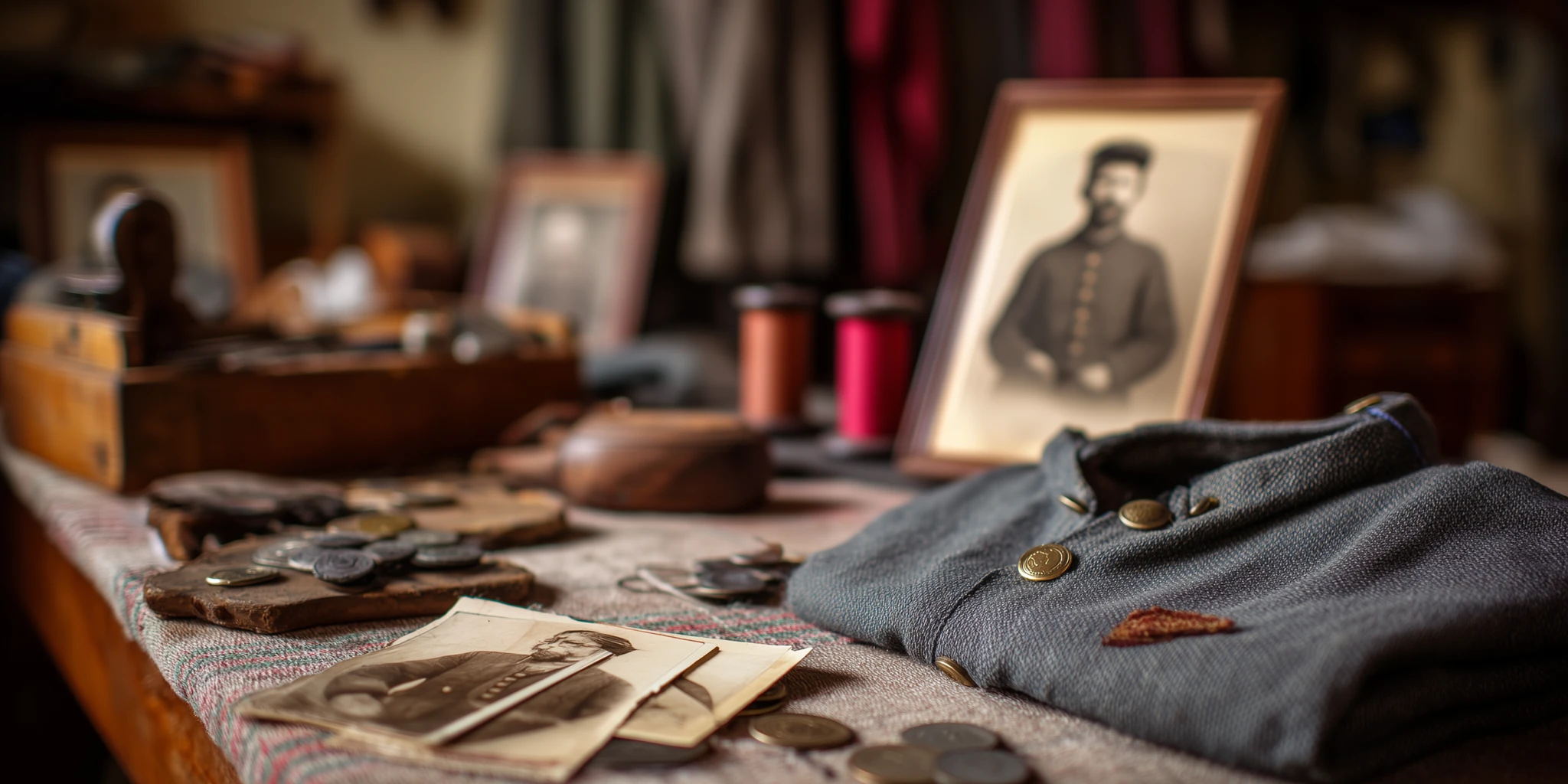
Grab your needle and thread, and get ready to time travel back to the 1860s. In this expedition, we will explore the causes and effects of the Civil War and understand the important role that sewing played at home and on the battlefield. The urgency for uniforms pushed the development of the sewing machine, which transformed this craft.

During the expedition, we will read and discuss letters, photographs, and diary entries to understand what life was like and how sewing was a means of survival and self-expression. What did it mean to be a citizen of the country?

Who was denied this, and why? Each week, students will research a particular historical event about the Civil War and plan their sewing project around one particular Civil War theme—like perseverance, loss, or bravery. They will connect their present day to the past. Come help add to the tapestry of stories about this challenging and transformative period in our history!

STEM

Storm Chasers

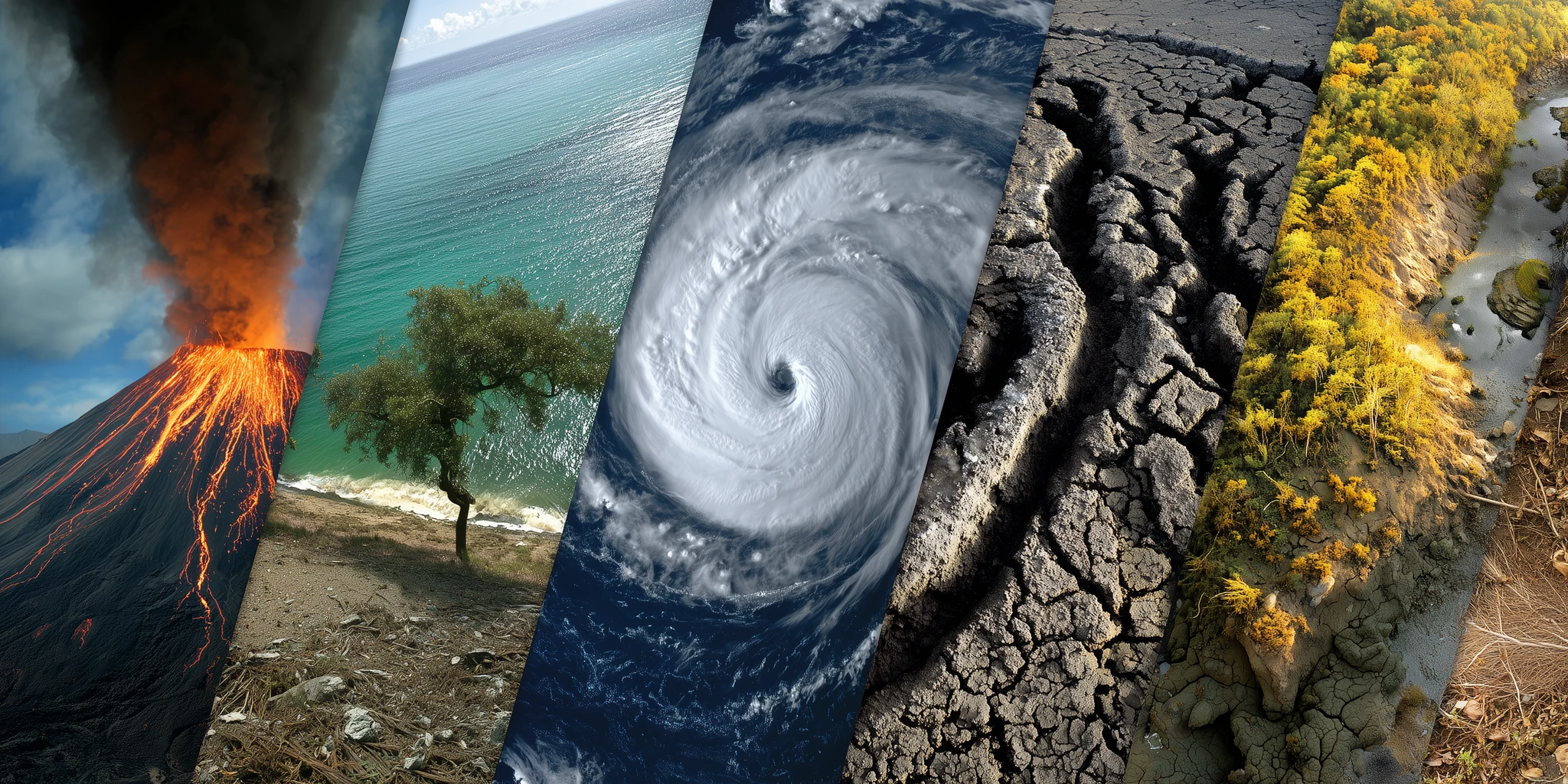
Nature can be beautiful—but also extremely dangerous: hurricanes, tornadoes, floods, storms, wildfires, earthquakes, tsunamis, and volcanoes. In this expedition, we will explore these and other natural hazards—and design a way to survive them! By understanding our world's processes, climates, ecosystems, and geography, we will uncover the origin of these disasters and how we can respond to them.

Through research and effective planning, you will not only explore the origins and dynamics of these natural phenomena, but also learn the recommended actions to face any one of these events—and design a device or home that could, in the future, save lives.

Our Body The City

Better health, safer cities, tastier food.

The key to the future may be inside us all. Ever wondered why your skin glows, how your taste buds recognize flavors, or which cells help send those messages to your brain? If your cells could talk, what would your brain cells say to your muscle cells? Join us on an adventure to understand the inner workings of the human body.

In this 12-week expedition, students will study the human body—its organs, tissues, and cells. But they won’t stop at basic understanding: they’ll develop creative projects as diverse as humanity itself. Imagine using the liver to design an ideal factory, cells as the foundation for new therapies, or the circulatory system as inspiration for a cutting-edge plumbing or transit network.

We’ll explore why the body makes millions of new cells every second, and why skin cells regenerate quickly while nerve cells do not. Along the way, students will draw analogies between the human body and what makes factories, companies, and cities function effectively. Each organ, system, and cell becomes part of a bigger metaphor.

Through hands-on investigations using Foldscopes, interactive discussions, and project-based learning, students will uncover the specialized roles of cells—and the real-world lessons they offer for innovation, health, and design.

Wildcrafted

What if magical plant remedies were real?

This expedition blends real-world foraging with fantasy herbology. Students explore plant adaptations, systems in plants and animals, and the science behind both traditional and fictional remedies. We’ll investigate how plants grow, reproduce, defend themselves, and interact within ecosystems, while also exploring plant-based solutions for healing, sustainability, and survival.

Through hands-on experiments, creative design, and mythical inspiration, students will reimagine ancient and futuristic herbal wisdom.

Let's go to Space Camp!

Over 12 weeks, they’ll explore the laws of physics and space science to understand how objects move through space, how astronauts live and work on the International Space Station, and how engineers design the technology that gets us there. Students will take part in astronaut training simulations, design challenges, and interactive exhibits that bring space science and engineering to life.

With a mix of hands-on experiments, collaborative problem-solving, and design thinking, students will tackle real-world challenges that astronauts face. This expedition culminates in a final project where students pitch their own space-ready invention, product, or experiment—designed to survive the extremes of space.

Stomp Into Space

Ready for launch?

What does it take to beat gravity and explore the final frontier? In this expedition, you’ll get to launch your own stomp rockets while learning the science behind how they work! Come explore Newton’s Laws of Motion and see how they explain the forces that control your rocket’s flight. Learn how to calculate important things like speed, height, and how long your rocket stays in the air. Discover how air resistance and different surfaces (like concrete vs. grass) can change how your rocket moves and lands.

This fun, hands-on course will help you understand the math and physics that make rockets blast off!

Math

Algebraic Outbreak

A strange illness is spreading fast, and doctors are stumped! As top medical detectives, it’s up to you to crack the case. You’ll analyze patient data, track how the disease spreads, and calculate the perfect cure—using math as your most powerful tool. From solving equations to predicting outbreaks and calculating life-saving treatments, every discovery brings you closer to stopping the crisis.

The world is counting on you—can you solve The Algebraic Outbreak before it’s too late?

Connect to real-world epidemiology—the study of how diseases spread—public health, and how scientists work to control outbreaks. Explore the math behind tracking infections, analyzing data, and developing treatments.
By engaging in this project, you’ll step into the role of real-world scientists, applying math to life-saving medical mysteries and global health challenges.

Create a crisis response plan that includes calculations, treatment plans, and recommendations for stopping the outbreak.

Build a Digital World

You have inherited a big plot of land! It’s up to you and your peers to bring it back to life!

This math cycle will guide students through the process of designing and programming a virtual world using geometry and computer science principles. Each part will introduce new geometry concepts and computational thinking skills, culminating in a final interactive digital environment.

Across three parts of this cycle, you’ll use geometry skills to plot out a town with your team, apply transformations to create building layouts, and calculate 3D volume to design specific areas of your choice. By the end, you’ll have created a full-color blueprint and 3D model of a section of the town that you will then integrate with your class.

Along with a complete plan—featuring calculations and written explanations that show your mathematical thinking—you will build your own digital world!

My Life in Numbers

Have you ever wondered what your daily life and dreams would look like through the lens of math?

Math meets SEL. As pre-algebra students get ready to move forward in their education, they will reflect on their personal experiences, future goals, and daily life using mathematical representations. They'll write and solve expressions, equations, and inequalities related to their identity, relationships, routines, and goals.

The project culminates in a digital or physical “Math About Me” one-pager.

Enroll Now
Learn about the opportunities available for you children at
The Classical Academies
Start Now